
FINTRAC & What’s Hanging on Your Wall?
September 5, 2026
Sean Parker AML Consultancy Inc.
How Canada’s Art Market Is Becoming the Next Frontier for Anti-Money Laundering Compliance and Financial Crime Prevention
Abstract: Art and antiquities are expressions of culture, history and wealth, but they can also provide an attractive vehicle for financial crime. Their high values, subjective pricing, uncertain provenance and potential for anonymous ownership create vulnerabilities that criminals can exploit. While international bodies such as the Financial Action Task Force have highlighted money-laundering and terrorist-financing risks in the art and antiquities market, Canada has been slower to address them. Recent changes to Canada’s anti-money-laundering regime, particularly those affecting financing and leasing businesses and expanding FINTRAC’s powers, may already bring some galleries, auction houses and antiquities dealers within the regulatory perimeter. Canada now has an opportunity to recognize the particular risks of this market and build a regulatory framework suited to them.
Art, Culture and Crime
Art galleries are symbols of a country’s culture, wealth and history. For many people, visiting them is an essential part of travelling. In Amsterdam, it might be the Van Gogh Museum; in Paris, the Louvre. My favourite gallery is the Belvedere in Vienna, and Gustav Klimt is my must-see artist.
Klimt famously painted The Kiss, an image ingrained in the cultural consciousness of Austria and reproduced throughout Vienna on mugs, plates, posters and seemingly every other form of tourist merchandise.
For centuries, art and antiquities have been vehicles for expressing culture, emotion and beauty. They have also been vehicles for crime.
An estimated 650,000 works of art were looted during the Second World War, primarily from Jewish owners and families persecuted by the Nazis. (Nazi plunder | History | Research Starters | EBSCOhost) The consequences of those crimes continue today, as descendants attempt to trace and recover works that disappeared more than 80 years ago.
In 2023, the Financial Action Task Force published Money Laundering and Terrorist Financing in the Art and Antiquities Market, highlighting the relationship between the international art trade and financial crime. Yet here in Canada, we are still not doing enough to address the risk.
Consider Portrait of a Girl by Dutch artist Toon Kelder.
A BBC report described how the painting had belonged to Jacques Goudstikker, a prominent Dutch art dealer who died while fleeing the Nazi invasion of the Netherlands. The painting was taken from Goudstikker and eventually sold at auction in the 1940s to Hendrik Seyffardt, a Nazi collaborator. His descendants remained in possession of the work until recently.
One of the most striking aspects of the case was that Seyffardt’s descendants potentially could have sold the painting because the statute of limitations associated with its theft had expired. It illustrates one of the many legal obstacles families can encounter when attempting to reclaim stolen art.
The painting was ultimately returned to Goudstikker’s family.
Gustav Klimt’s Portrait of Adele Bloch-Bauer I, commonly known as Woman in Gold, provides another famous example.
The Nazis seized the painting from the family of Maria Altmann during the Second World War. Decades later, Altmann challenged the Austrian government in an effort to recover it and four other Klimt works.
Her legal battle demonstrated how difficult it can be to establish ownership generations after a work has been seized, transferred, sold and placed in a public collection. It also demonstrated the imbalance between individual families seeking restitution and the institutions or governments possessing the works.
Altmann eventually prevailed. Her remarkable fight became the subject of the film Woman in Gold, starring Helen Mirren and Ryan Reynolds.
These are famous cases, but they are hardly isolated ones. Stolen and improperly acquired works continue to hang in museums, galleries and private collections around the world while families pursue their return.
Canada is not immune.
The Canadian Connection
In 2020, the Art Gallery of Ontario returned Still Life with Flowers by Jan van Kessel the Elder to the heirs of Dagobert and Martha David. The painting had been sold under duress during the Second World War.
After being sold in Brussels, the painting moved through the international art market, eventually reaching an art dealer in the United Kingdom who sold it to a Canadian collector. It was subsequently donated to the AGO.
The National Gallery of Canada has also found itself in possession of improperly obtained art and antiquities. A Tang Dynasty object was returned to the People’s Republic of China in 2001, while a painting originally looted by the Nazis was returned to France in 2006.
The broader problem extends well beyond wartime restitution.
The international trade in stolen antiquities and illicit art is a multibillion-dollar criminal enterprise. (How the RCMP Investigates International Art Theft and Antiquities Smuggling) Looted archaeological objects, stolen masterpieces and works with questionable provenance can move through dealers, collectors, auction houses and international financial structures before ultimately reaching legitimate collections.
Canada can serve both as a destination and a transit point for these goods. Collectors, dealers and galleries in cultural centres such as Montreal, Toronto and Vancouver can find themselves dealing with works whose ownership histories are incomplete or deliberately obscured.
That presents an obvious financial-crime problem.
A Regulatory Blind Spot
Canada’s current approach to detecting stolen art continues to rely heavily on border enforcement, law enforcement and the integrity of participants in the art market.
Investigative journalist Joshua Knelman identified the problem more than a decade ago. Following the recovery of two important artworks in Toronto and Montreal in 2010, he observed that detection in an otherwise largely unregulated system appeared to depend heavily on the honesty of local dealers and brokers.
The underlying vulnerability remains.
Art has several characteristics that can make it attractive for laundering or concealing wealth. Values can be highly subjective. Transactions may be private. Beneficial ownership can be difficult to establish. Works can be held through corporations, trusts and special-purpose vehicles. Free-trade zones and offshore structures can further obscure ownership and movement.
Perhaps most importantly, an artwork does not necessarily need to physically cross a Canadian border for Canadian money or Canadian participants to be involved in a transaction.
A valuable painting can change beneficial owners offshore while remaining in storage elsewhere.
That opacity is attractive to criminals.
The Canadian government has developed preservation, conservation and risk-management guidance for heritage collections. Galleries and dealers may incorporate some of these practices into their own risk-management systems.
What is largely missing, however, is guidance specifically addressing financial crime and the money-laundering risks associated with art and antiquities.
Is the Regulatory Perimeter Already Expanding?
Canada’s Proceeds of Crime (Money Laundering) and Terrorist Financing Act and its regulations do not currently establish a comprehensive reporting-entity category specifically for art galleries and dealers.
But that does not necessarily mean every gallery or auction house sits outside the regime.
Recent changes have brought financing and leasing companies into Canada’s anti-money-laundering framework.
Following an inquiry with FINTRAC, it was confirmed that an art gallery offering certain financing or leasing services involving property valued at $100,000 or more, other than real property or an immovable, may become subject to the Act.
Whether an individual gallery is captured will depend on how its financing or leasing activities are structured.
That distinction matters.
In recent communications with several galleries and auction houses offering financing or leasing options, responses ranged from muted to explicit resistance. Some indicated that the compliance obligations were not something they wanted to undertake because of the associated cost and administrative burden.
Wanting to avoid an obligation, however, does not determine whether the obligation exists.
Recent legislative changes have also strengthened FINTRAC’s compliance and enforcement toolkit. These include higher maximum monetary penalties, mandatory compliance agreements, greater expectations for effective risk-based compliance programs, restrictions involving anonymous clients and accounts, and expanded oversight capabilities.
Of particular significance is FINTRAC’s ability to examine records and inquire into the business affairs of persons or entities it believes may be reporting entities.
For the art world, the implication is important.
A gallery, antiquities dealer or auction house offering financing or leasing services could potentially attract FINTRAC scrutiny to determine whether its activities bring it within Canada’s AML regime. An organization cannot simply decide that the compliance framework does not apply because implementing it would be expensive or inconvenient.
Moving Forward
Art galleries, antiquities dealers and auction houses that provide financing or leasing should assess their regulatory position now.
That should begin with determining whether their activities create obligations under the Proceeds of Crime (Money Laundering) and Terrorist Financing Act. Where uncertainty exists, organizations should obtain advice from a lawyer with appropriate regulatory expertise.
Financial institutions also have a role to play.
Banks and other financial institutions providing services to galleries, auction houses and art and antiquities dealers should understand their clients’ business models and determine whether those clients may themselves have compliance obligations.
Where they do not, financial institutions should still seek to understand what controls are in place to manage financial-crime risks, including provenance, beneficial ownership, transaction structures, source of funds and unusually complex or opaque transactions.
But industry action alone will not close the gap.
The Department of Finance and FINTRAC should consider developing a financial-crime risk-management framework specifically suited to galleries, auction houses and art and antiquities dealers.
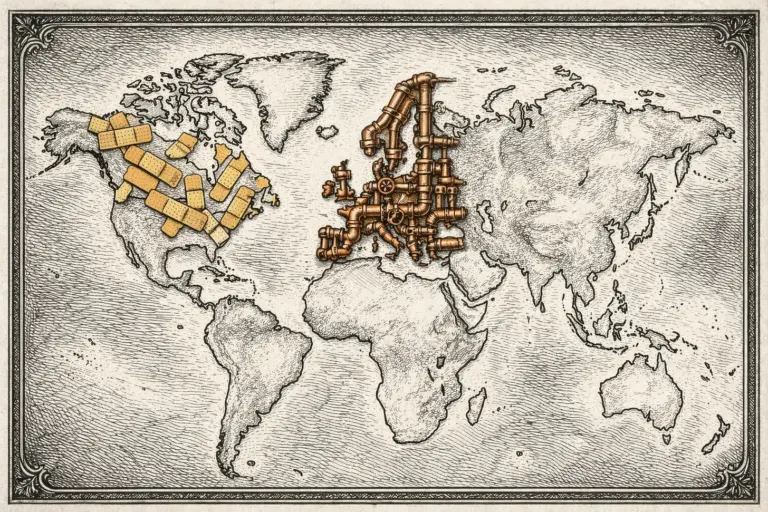
Canada would not be starting from scratch. Other jurisdictions have already acknowledged the vulnerabilities of the art market within their AML frameworks. The approaches reflected in Europe’s Fifth and Sixth Anti-Money Laundering Directives provide useful reference points for considering a Canadian model.
Traditional compliance-program elements can provide the foundation: risk assessment, policies and procedures, know-your-client requirements, beneficial-ownership identification, transaction monitoring, record keeping, training and reporting.
But art and antiquities are not simply another financial product.
Provenance matters. Authenticity matters. Private sales matter. Freeports matter. Intermediaries matter. The distinction between legal title and legitimate ownership can matter enormously.
Any effective Canadian regime therefore needs to reflect the unique characteristics of this market.
FINTRAC should also engage directly with galleries, auction houses, dealers, museums and other participants. The purpose should not simply be enforcement. Regulators need to understand how this market operates if they are going to regulate its financial-crime risks effectively.
Art can preserve history.
It can also conceal it.
The question for galleries, collectors and financial institutions is becoming increasingly difficult to ignore: Do you really know what is hanging on your wall?
Five Key Points
- Art and antiquities present distinct financial-crime risks because high values, subjective pricing, private transactions and opaque beneficial ownership can make them attractive vehicles for concealing or moving wealth.
- Canada has experienced multiple cases involving stolen or improperly acquired artwork, demonstrating that illicit art is not merely a European or historical problem.
- Galleries and auction houses offering certain financing or leasing services may already fall within Canada’s anti-money-laundering regime, depending on how those activities are structured.
- FINTRAC’s expanded oversight and enforcement powers increase the importance of galleries, dealers and auction houses determining whether they have regulatory obligations rather than assuming they fall outside the AML framework.
- Canada should develop an art-specific financial-crime framework that addresses provenance, beneficial ownership, source of funds and other risks unique to art and antiquities while drawing on approaches already adopted in other jurisdictions.