
Ambassador Wiseman and BMO CEO Darryl White: Don’t Waste the Crisis
June 16, 2026
Darry White BMO

Turning Trade Uncertainty Into Opportunity: How Canada Can Drive Productivity, Innovation and Economic Resilience
Abstract: Ambassador Wiseman explains that Canada’s relationship with the United States remains vital, deeply integrated and economically significant, but Canada cannot rely on geography or historical ties alone. The current trade and tariff pressures as a wake-up call for Canada to improve productivity, invest more aggressively in innovation, scale companies, build infrastructure, adopt technology faster and diversify trade beyond the U.S. The central message is that Canada has enormous strategic advantages, but must act with greater urgency, risk appetite and ambition to turn those advantages into long-term economic strength.
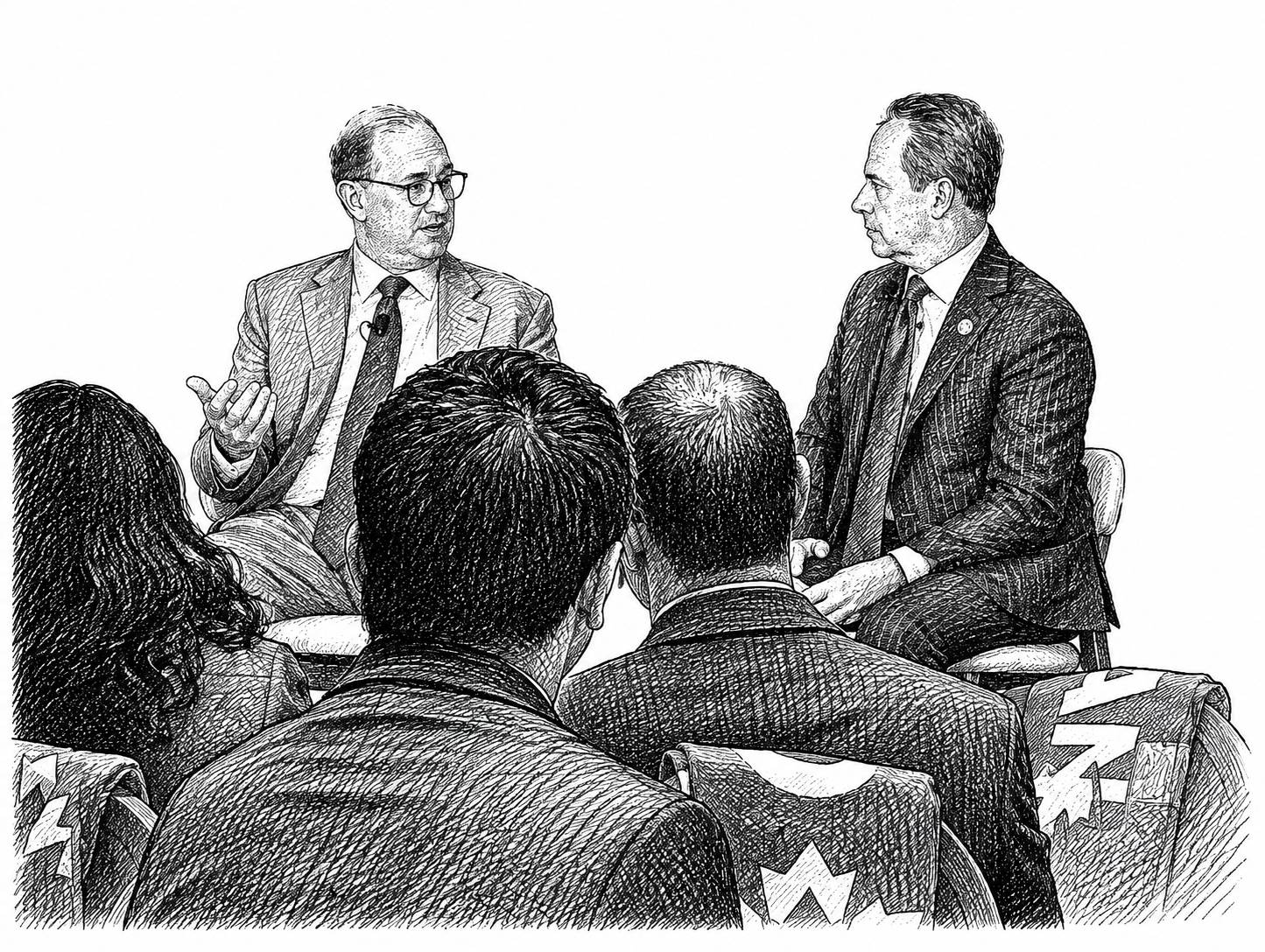
“While Americans don’t wake up every day thinking about Canada. We are obsessed with the US.”
That was one of the most candid lines from Canada’s Ambassador to the United States, Mark Wiseman, in conversation with BMO CEO Darryl White. It was also one of the most important.
Canadians watch every tariff headline, every trade threat, every signal from Washington as if the entire relationship turns on the latest political moment. Wiseman’s reminder was useful: Canada matters enormously to the United States, but Washington has many competing priorities. If we want to be heard, we need to be clear, serious and commercially relevant.
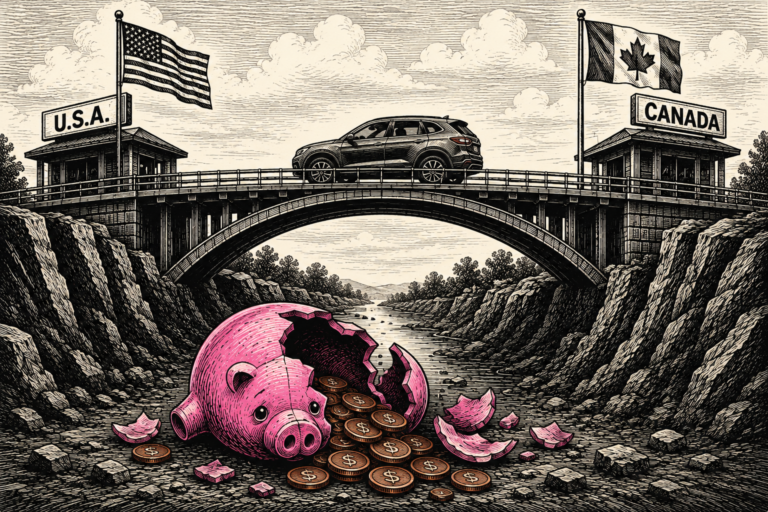
The Canada-U.S. relationship remains extraordinary. Every day, roughly $2.4 billion in goods crosses the border. More than 120 million people cross annually. Our energy systems, air corridors, supply chains and capital markets are deeply connected. Much of this works quietly, without speeches or headlines.
That should reassure us. It should not make us complacent.
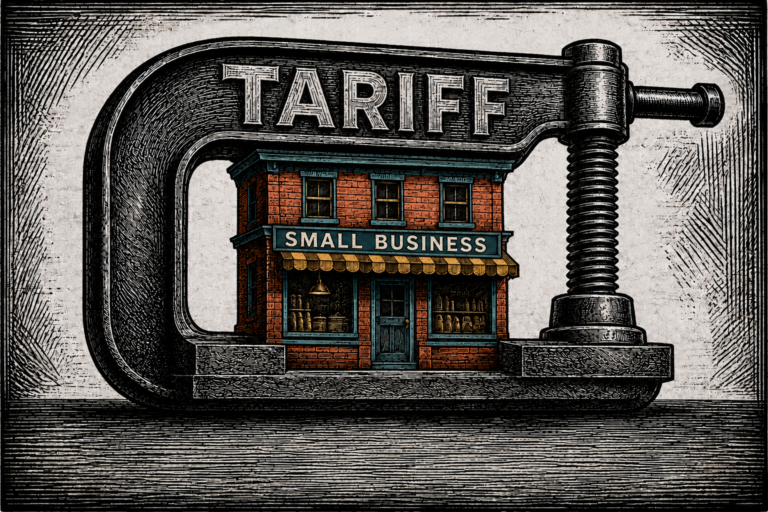
On USMCA, Wiseman assured the room: “There is no cliff on July 1st.” The agreement remains in force. The more immediate challenge is the sectoral tariffs affecting steel, aluminum, autos and forestry. Those are real, painful and urgent.
But the deeper message was not about one negotiation. It was about Canada’s own economic performance.
“We’ve got to get our act together,” Wiseman said.
He is right.
Canada has world-class advantages: critical minerals, energy, talent, immigration, AI capacity, financial institutions and proximity to the world’s largest economy. As Wiseman put it, “We have a lot of the things the world wants today.”
And yet our productivity continues to lag. We underinvest in innovation. We move too slowly on infrastructure. We too often treat scale as someone else’s problem. We are excellent at identifying opportunity, but less consistent at converting it into globally competitive companies.
For the Canadian financial sector, this matters.
Lenders, banks, fintechs and capital providers sit at the centre of the productivity conversation. Capital allocation determines what gets built, which companies scale, how quickly businesses adopt technology, and whether entrepreneurs can compete beyond Canada’s borders.
Government has a role to play. Regulation, tax policy, infrastructure and trade policy matter. But the private sector cannot wait for government to solve the productivity problem.
Wiseman said it plainly: “We’ve got to be more innovative. We’ve got to take more risks.”
That should be a challenge to all of us.
Canada does not need to choose between the United States and the rest of the world. Wiseman captured the right approach: “We shouldn’t be selling the United States. We should just be growing everything else faster.”
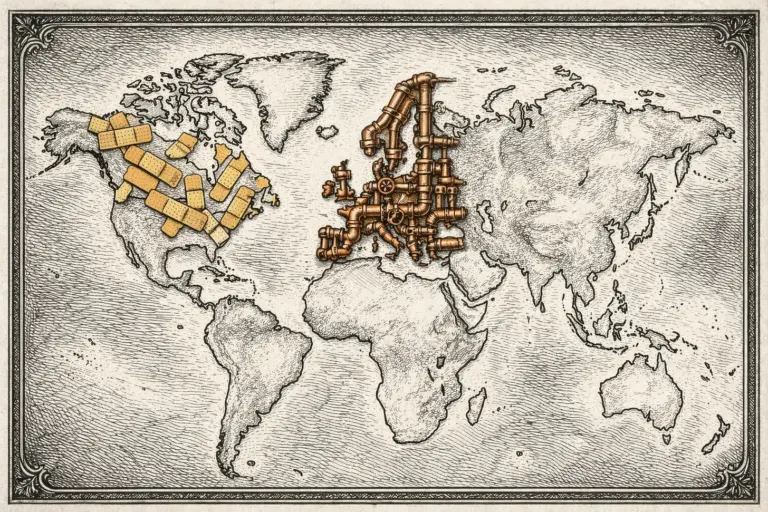
That is the strategy Canada needs. Grow the U.S. relationship. Deepen it where it makes sense. Defend it when necessary. But also build the infrastructure, trade corridors, export capacity and financing models that allow Canadian businesses to serve Europe, Asia, Latin America and Africa with greater ambition.
Diversification is not decoupling. It is resilience.
A stronger Canada is also good for the United States. Wiseman made that point clearly: “A strong, resilient, self-reliant and more diversified Canada is great for us, but it’s also great for the United States of America.”
That is the right frame. Canada should not approach the next decade as a smaller country seeking permission from a larger neighbour. We should approach it as a serious economic partner with the resources, talent, technology and capital that North America needs.
There was another line from Wiseman that deserves to become a business mantra: “Don’t waste the crisis.”
This is Canada’s moment to act.
We need more productivity-enhancing investment. More support for scaling companies. More risk capital. Faster adoption of AI and digital infrastructure. More competitive lending markets. More export ambition. More urgency.
The Canada-U.S. relationship will remain foundational. Geography still matters. Trade still matters. Trust still matters. But Canada’s future will not be secured by geography alone.
It will be secured by what we build, finance and scale from here.
We should not waste the crisis.
5 key points
- Canada-U.S. ties are foundational but not automatic.
The relationship is massive and deeply connected, but Canada must remain clear, serious and commercially relevant to stay on Washington’s agenda. - There is no immediate USMCA cliff, but tariffs are a real problem.
Wiseman reassures that USMCA remains in force, while warning that sectoral tariffs on steel, aluminum, autos and forestry are urgent challenges. - Canada’s deeper problem is productivity.
The article argues that Canada has world-class assets but underinvests in innovation, infrastructure, technology adoption and scaling globally competitive companies. - The financial sector has a central role.
Banks, lenders, fintechs and capital providers determine what gets financed, which businesses scale and how quickly Canadian companies become more productive. - Canada needs diversification, not decoupling.
The article calls for strengthening the U.S. relationship while also building trade corridors, export capacity and financing models for Europe, Asia, Latin America and Africa.