
 Event Insights
Preparing for the Downturn
June 17, 2026




How Proactive Risk Management Can Help Lenders Navigate Economic Uncertainty and Build Resilience Through the Credit Cycle
Abstract: In this panel on credit risk, lending strategy, and preparing for a potential downturn, Brent Reynolds (CEO & Founder, Payson) moderated a discussion with Eric Walker (VP, Retail Risk Credit Strategy, RBC), Richard Goyder (Chief Credit Risk Officer, Neo Financial), and Jeanot Dawson (CEO, Karoo) on how lenders should think about risk, growth, data, AI, and portfolio management in a more uncertain environment. The panel explored how this cycle compares to past downturns, why many losses are already embedded in existing books, how lenders can use downturns to collect better performance data, and why risk teams need to translate credit concerns into P&L language. Across bank, fintech, and near-prime lending perspectives, the message was clear: preparing for a downturn is not about one dramatic move, but about maintaining the full risk system—models, strategies, account management, collections, data infrastructure, and talent—so lenders can protect the book while still identifying smart growth opportunities.
Brent Reynolds: I would love to start out with this group with a pop quiz.
When we think about preparing for the credit downturn, if you could describe in one word where you think we are now or what the environment is now, what would that word be?
Richard, let’s start with you.
Richard Goyder: My one word is “again.”
I have been through several of these. I was doing Eric’s job in 2007 and 2008. I have seen this before. They are all different, but they are also all the same.
This time, I think the outlook is probably not as bad. I do not think this is a prolonged downturn. But the degree of uncertainty and volatility this time is big. Tariffs, trade, wars, and the impact on the resource economy all make this highly volatile and unpredictable.
At the moment, it is looking like a downturn, but not one that will be prolonged or very deep. I hope.
Brent Reynolds: Eric, what is your word?
Eric Walker: My word would be “historic.”
I think our future selves, five-plus years from now, are going to look back at this time and see that the lenders that were smart used it to collect a lot of data and learn a lot about where the good lending is in a credit downturn and where the bad lending is.
Canada fortunately has not had a lot of these downturns. The downside is that we do not have a lot of data to say what happens when things go south. What type of consumer is resilient? What types of products are resilient?
I am excited to be through it and then excited to see how to capitalize on the learnings.
Brent Reynolds: Jeanot, what about you?
Jeanot Dawson: The word I would use is probably “okay.”
This is not a terrible crisis like 2008 or a sudden crisis like late 2022, when we had the massive inflation shock post-COVID. This has been a slow burner that we have all seen coming, especially in Canada, for the last 18 months or so.
From a lender’s point of view, that makes it interesting because you can adapt in real time and prepare. You can modify your credit policies in anticipation of something that is definitely going to happen and an environment that is going to get more challenging over the next few years.
Brent Reynolds: The last year has been really interesting from a credit perspective, with tariffs, inflation, and now war.
How should lenders be thinking about their playbook and preparing for the credit downturn, both in the short term and the medium term?
Richard, maybe I will start with you.
Richard Goyder: The first thing that a lot of risk professionals in this room know, but that we keep having to tell our colleagues, is that almost all the loans that are going to go bad are already on the books.
It is too late. The people who are going to go bad are already booked, and they will go bad.
At the front end, in acquisition, obviously do not do anything stupid. But there is a limited amount your acquisition strategy is going to change.
The contrast between what Eric has to do and what Jeanot and I have to do is that we are still in growth mode. Whatever is going on in the economy, Neo is still looking to double the size of its business every year. Acquisition has to continue at pace.
There are things you can do around being conscious of geographic concentrations and being cautious there. But the evidence has not been as predictable as you might expect. It is not easy to say everything is concentrated where tariffs are or where they are not.
The actions you can take are around account management, early identification of high-risk accounts, and early treatment of delinquency. All of those pieces require extra attention and focus.
We have been through this before, and much of what we have in place around account management and delinquency reflects the need to respond to changing circumstances.
Yes, there should be heightened awareness, but fundamentally, we should continue to run with the strategies we had in place. If this environment requires something radically new, you probably were not doing the right things to start with.
Brent Reynolds: Every downturn is a little bit different. You mentioned different geographies. We have also seen different products behave differently. Personal loans have gone up quite a bit, and credit cards have been a little more resilient.
What have you seen in terms of how this downturn differs from the last one?
Richard Goyder: The geographies have been slightly different.
The real spike we have seen is in consumer proposals, which lead to accelerated charge-off from bankruptcy or consumer proposal. Over the last few months, we have seen a sharp spike there, particularly in consumer proposals.
That is always challenging because they are frequently surprise losses. People can be current until the point at which they charge off.
That was not as prevalent in previous downturns. I think it reflects how that market has developed and how people now have more awareness and access to that option.
The dog that has not really barked is mortgages. We know there was a lot of mortgage repricing in 2024, less in 2025, and another wave coming this year.
Sometimes I think I see evidence of it in higher-end customers, prime and super-prime customers who start to become delinquent. Maybe they have been hit with a mortgage payment reset and they are not paying us.
But we have not seen conclusive evidence of that, which is surprising given that mortgage lenders are doubling some people’s rates at renewal. Maybe it is still yet to come.
Brent Reynolds: Eric, as the only one up here from a publicly traded company, you are under strict requirements, so not RBC’s playbook specifically, but what general advice would you give the audience on what lenders should be doing from a playbook perspective?
Eric Walker: When the risk metrics start to move, it is a good opportunity to spend time with your business partners and educate them.
Do we really understand the risks we are taking? Let’s look at the margins and the decisions made over the last couple of years and try to quantify the risk.
The next question is: are we getting paid for that risk?
Under various scenarios, is that the kind of client or risk we want to build our franchise around or have on the books long term?
When risk was really low, that conversation was not always at the forefront. People were prioritizing different things with their time. Now it is at the forefront, and we are using the opportunity to have those conversations with business partners.
We are also reminding people about the foundational investments that need to be made on the risk side: talent and data.
Do we have the team in place to respond to this? Do we have the data and infrastructure to respond to this?
We are being more introspective and trying to understand where we may not have invested in the ways we wanted. We are using this opportunity to get buy-in for those investments going forward.
It is about asking whether we understand the risk, whether we are getting paid for it, and what long-term investments we need to make in the team and infrastructure.
Brent Reynolds: You mentioned business partners. Timing is key when preparing for a downturn, but being a risk professional can be a lonely world.
When risk is good, people ask why you exist. When risk is bad, people ask why you screwed it up.
The best time to prepare for the downturn was yesterday, but the next best time is today. How do you build the business case and convince the organization, which has its own growth goals, that action is needed?
Eric Walker: The success we have had is around understanding the cash flows of the client.
These cash flows may have temporarily looked good, but they were not resilient as risk turned. Turning the risk conversation into a P&L conversation has been very helpful because that is the language P&L owners speak.
PCL is part of it, but it is really about helping them understand the risk-revenue return.
Brent Reynolds: Jeanot, what about you?
Jeanot Dawson: When we think about preparing for the downturn, there are a couple of things.
First, this has been a slow burner, so you can adapt in real time.
Second, we are a near-prime focused lender. When you are underwriting a near-prime customer base, there is an inherent level of stress that population faces even in benign economic times.
We view this environment as a bit of an opportunity. We can still grow by underwriting a customer type where the severity of how they are affected by this environment is not relatively as bad as it may be for a prime customer.
Hopefully, we can also take market share from lenders that are more prime focused and are having to pull back on risk.
In downturns, the most vulnerable customers, where you see the biggest severity versus expectations, can actually be those with high incomes, prime credit scores, and high debt loads. If they experience an employment shock, it is very hard for them to recover.
Brent Reynolds: That is a really good point.
Back in 2008, when I was chief credit officer at Capital One during the Great Recession, we saw a much higher beta from the highest FICO customers. The best-score customers had the biggest shock. Subprime customers, in some ways, were already always in a recession and had a lower beta.
Eric, anything you remember from that time?
Eric Walker: The key way to underwrite clients has not changed.
The people who went bad in 2008 had similar profiles. The bad characteristics and good characteristics, good lending and bad lending, are reasonably consistent.
It is a matter of reminding people that even if you have had 20 years of good lending, those loans are on your books for a long period of time. Nobody ever sees the recession coming.
This one may have been more foreseeable, but I think people expected secured lending, like mortgages, to go bad. Instead, more of the unsecured book has gone bad.
Generally, the characteristics of good lending and bad lending have remained consistent.
Brent Reynolds: It would not be a panel in 2026 if we did not talk about AI.
Jeanot, Karoo is building an AI-native company. There are lots of AI use cases in collections and underwriting. Some are nascent and some are adding value now. Where do you see the most useful use cases?
Jeanot Dawson: What does being a full-stack AI company mean?
It means we do not just use AI in underwriting. We use it to process cash flow information much more efficiently than people could. It allows us to do deep, almost artisanal underwriting on very small loan sizes, such as a $1,000 loan or a $500 credit card, which normally would not be possible.
It also means we use AI throughout the entire business. We use AI agents to build our proprietary tech platform.
What is especially important in a downturn context is that a very small business like ours would historically have had a limited credit function and limited analytical capability. But now we have an AI credit function where we can get data almost instantaneously on loss rates and risks as they appear in our portfolio.
We can have a comprehensive picture of what is going on that we would not have been able to have in the past without AI.
Brent Reynolds: You also had interesting thoughts on AI displacing jobs and the impact on unemployment, and how that could factor into consumer stress.
Jeanot Dawson: That comes back to the point about the most vulnerable customers in a downturn being people with high income, high debt, and high credit scores.
I think AI-related disruption in the job market is a very underpriced risk in the medium term. Whole categories of professional jobs can, in some cases, be replaced by AI. People affected by those layoffs may struggle to quickly find similar positions that allow them to service their existing debt load.
I do not have a perfect answer for how you underwrite this, and I do not want to be an AI doomer, but it is something lenders need to think about.
People spend time asking whether they should underwrite the type of job that can be automated away. I think a lot of jobs can be automated with AI. It may be more important in the medium term to look at the employer rather than the job type.
Someone who works for the government may be less likely to lose their job quickly than someone working at Meta, for example.
Brent Reynolds: Richard, Neo is very tech-forward. You are always experimenting with AI. Where are you seeing the biggest use cases?
Richard Goyder: Apart from the fact that a much larger number of my team members are called Claude than used to be, we use AI in all the obvious places: building models and driving innovation.
As a fast-growing company, the way AI is driving productivity in our engineering teams is a source of both benefit and challenge.
They can generate new products, new features, and implementation much more quickly. That is great, but the sheer volume we have to absorb is challenging.
The other thing I worry about as a medium- to long-term risk is talent.
The jobs I spent the first five years after graduation doing are jobs that could now fundamentally be done by AI. Someone asked me whether I could do the job I do now without those five years, and the answer is probably no.
As we worry about talent, where do you get people with that grounding and experience if the most basic analytical jobs are being done by AI?
AI cannot do it all itself. We still need people at the analyst level, but they are doing something slightly different. Whether that gives them the right experience, I do worry about how we fill that talent layer going forward.
Brent Reynolds: When we think about preparing for the credit downturn, people usually talk about two dimensions.
Where are we right now? Should we be tweaking or making big moves? And what should those moves be? Credit line decreases, pulling out of acquisition, doubling down on collections?
Eric, what should people be doing now? Should it be tweaks or big moves? What levers matter, and which ones maybe do not matter as much?
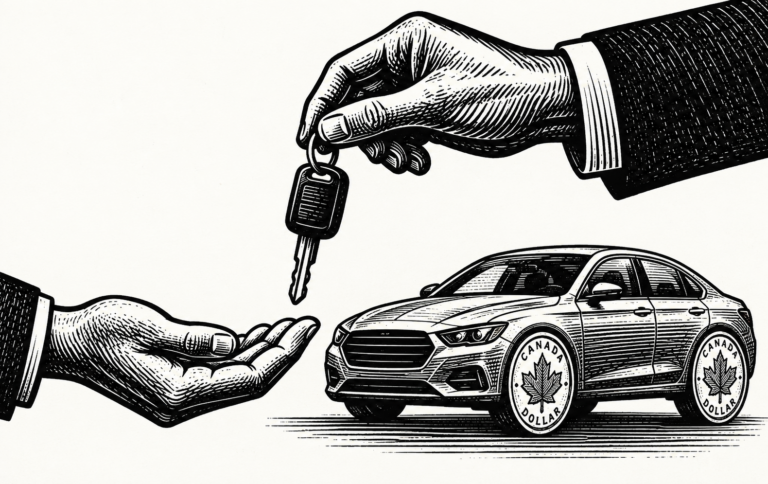
Eric Walker: We have been using the analogy of a car.
Your models are like the engine. Your strategies are like the transmission. Your credit line decreases, active closures, and account actions are the brakes.
People want to do one thing and have it fix the problem. But the bad loans are already on the book, and your car needs maintenance constantly.
Each part needs to be replaced or updated at different life cycles, and all of them need to work together. You would not want to lean into lending if you did not have brakes. If you do not have a good transmission, it does not matter how good your engine is.
If you are maintaining these things regularly, it becomes a system that works together. It is not just tweak or pull back. You do not need knee-jerk reactions.
You should think about it as an ecosystem and a system that you always invest in, maintain, and use to navigate through the cycle.
If we want to go fast, we need to build the brakes.
Brent Reynolds: Richard, what about from your perspective?
Richard Goyder: If you operate at Eric’s scale, even small tweaks are big moves.
I agree that this is not the time to make dramatic moves. You should use the measures you already have in place and maybe tighten them up a little bit.
What looked like a minor risk in a benign environment may have a higher probability of turning bad in a tougher environment.
Growth companies also need to be aware that there is opportunity here. For sensible reasons, large players are probably going to be tightening and becoming more cautious.
With the right approach, that is an opportunity for companies like Neo and Karoo that are trying to grow and fight for market share from a different position.
We may have a more accommodating risk box than a large bank. Customers who previously would have been approved by a large bank may now fall on the borderline where those banks are more cautious. That can be an opportunity, but we have to make sure we do it sensibly.
The other point is that Eric is right: it is a great time to gather bad data. You are going to need to build models in the next few years, and you will want bad data to build them with. There is no time like now to gather it.
Brent Reynolds: Jeanot, you are talking to institutional lenders. How are they viewing where we are in the cycle? Are they being more cautious?
Jeanot Dawson: It is an interesting time.
On one side, institutional lenders are being cautious. They are definitely cognizant that there are big risks in the economic environment over the next few years.
We spend a lot of time interacting with private credit funds, which tend to fund early-stage fintechs on the asset side. The interesting thing is that they also raised a lot of money over the last few years and are keen to deploy it.
It is not like 2022 or 2023, when the post-COVID shock caused the market to dry up for people reliant on capital markets. Now, people are cautious, but it is much more constructive.
Audience Question: With financial institutions preparing for a downturn and balancing risk, how do you balance lending and risk without pushing consumers toward higher-interest lending or unlicensed payday lenders that may not help their situation?
Richard Goyder: That is a fantastic question.
It is an opportunity for lenders that are prepared to take on a little more risk where those opportunities exist.
The issue of the Canadian industry not providing enough access to credit for people who need it, resulting in them going to unlicensed lenders, is an industry issue and primarily a regulatory issue.
It is not individual companies pushing people into these places. It is that, as an industry, we do not have the overall risk appetite to provide those people with a solution.
If regulators are concerned about people ending up with unlicensed lenders, they need to look at regulation that would enable organizations like mine to lend more deeply and broadly, given current cost-of-borrowing legislation and related requirements.
Here are 10 key insights from the panel:
1. This downturn may be familiar, but it is still different
Panelists noted that downturns share common patterns, but this cycle includes unique uncertainty from tariffs, inflation, war, mortgage resets, and shifting consumer behaviour.
2. Many future losses are already on the books
Goyder emphasized that most loans that will go bad have already been originated, making account management, delinquency treatment, and early risk identification critical.
3. Downturns are opportunities to collect valuable risk data
Walker described the current environment as “historic” because lenders can use it to learn which consumers, products, and portfolios are resilient under stress.
4. Risk teams need to speak the language of P&L
Turning credit risk into a risk-revenue-return conversation helps business partners understand whether the institution is being properly paid for the risk it is taking.
5. Prime customers with high debt loads can be highly vulnerable
Panelists noted that high-income, high-credit-score consumers may experience significant stress if employment shocks make it difficult to service large debt obligations.
6. AI can help smaller lenders build stronger risk capabilities
AI-native models can give smaller firms deeper underwriting, faster portfolio analytics, and more real-time visibility into loss rates and emerging risks.
7. AI-related job disruption is an emerging credit risk
The panel flagged the potential for AI-driven employment disruption to affect professional workers with high incomes, high credit scores, and high debt burdens.
8. Lenders need a full risk system, not one silver bullet
Walker’s car analogy framed models as the engine, strategies as the transmission, and line management or closures as the brakes. All parts need regular maintenance.
9. Growth lenders may find opportunity as larger players tighten
As major institutions become more cautious, fintech and near-prime lenders may be able to serve creditworthy customers who fall outside a tightened bank risk box.
10. Responsible access to credit remains a broader industry challenge
The panel closed by noting that if mainstream lenders cannot serve higher-risk consumers appropriately, some borrowers may be pushed toward unlicensed or harmful credit options.