
The Tariff Is Becoming a Small-Business Cash-Flow Problem
August 25, 2026
Gary Schwartz Canadian Lenders Association

How Tariff Pressures Are Reshaping Small-Business Cash Flow, Credit Access and Financing in Canada
Abstract: Most Canadian small and medium-sized businesses do not experience a tariff as trade policy. They experience it as a cash-flow problem. The federal government’s new $7.5 billion support package recognizes that trade disruption moves quickly from the border to the balance sheet. The priority now is execution. Government must work closely with Canada’s lending sector to ensure that fast, accessible financing reaches otherwise viable businesses before temporary pressure causes permanent economic damage.
The federal government’s response to the latest U.S. tariffs sends an important message to Canadian businesses: standing up for Canada at the border must be accompanied by meaningful support for businesses here at home. The government has announced $7.5 billion in new and enhanced measures, including additional funding through the Regional Tariff Response Initiative, a new $500 million liquidity stream through BDC’s Pivot to Grow program, the $2 billion Canada Strong Diversification Fund and $3.5 billion in rapid-response support for workers and employers. These measures are welcome, but the next challenge will be turning announced capital into accessible capital.
Tariffs Move Quickly to the Balance Sheet
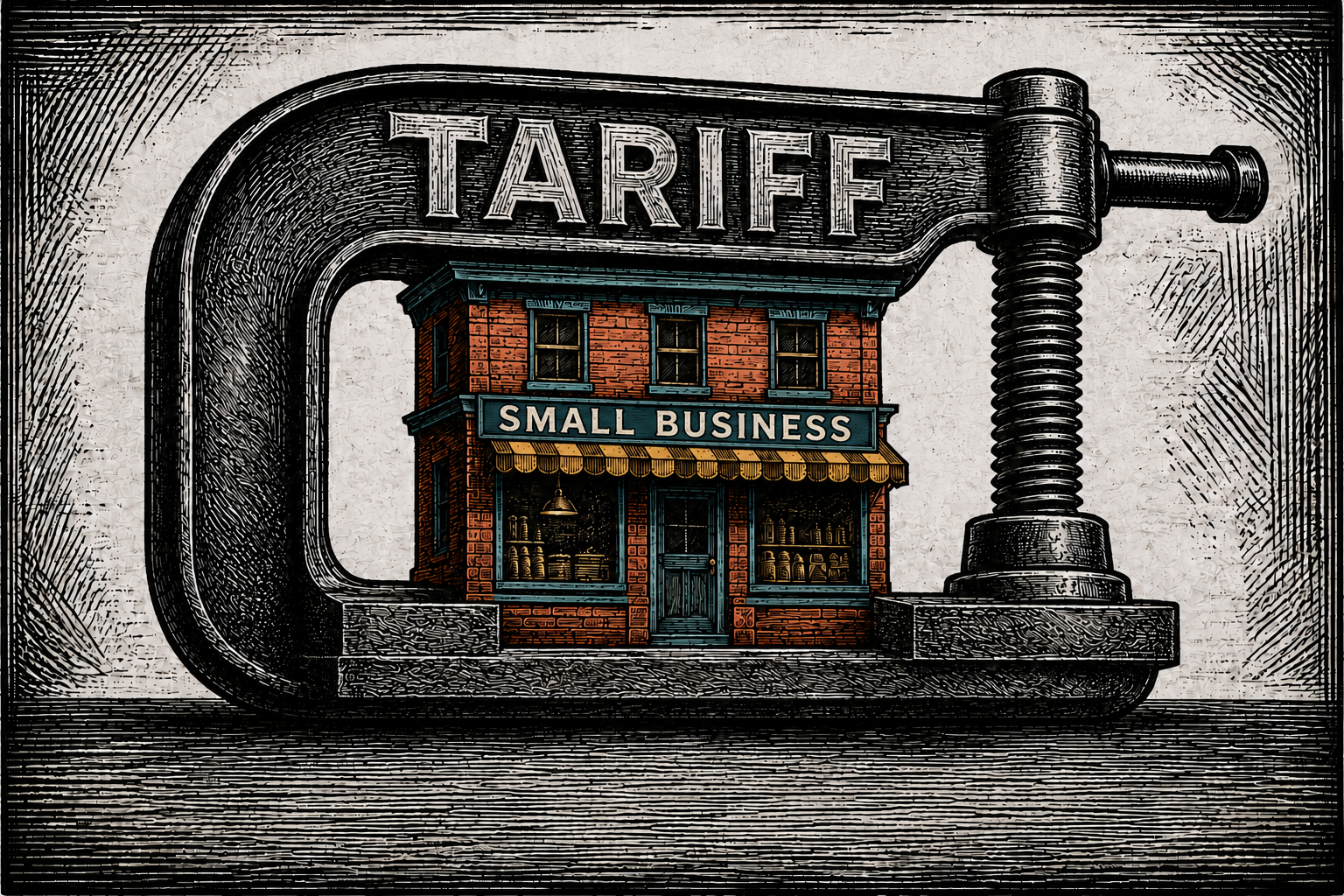
Most Canadian businesses do not experience a tariff as trade policy. They experience it as a cash-flow problem. A manufacturer pays more for materials, an importer must carry additional inventory, an exporter loses an order or waits longer to be paid, and a retailer faces higher wholesale costs but cannot pass the full increase to customers. The tariff may start at the border, but the financial pressure quickly moves onto the company’s balance sheet, affecting payroll, inventory, investment and its ability to meet existing obligations.
For small and medium-sized businesses, that pressure can become acute very quickly. These companies generally have smaller cash reserves, less negotiating leverage with suppliers and fewer financing alternatives than large corporations. An otherwise healthy business can find itself drawing more heavily on an operating line or postponing an important investment, not because its underlying business model has failed, but because tariffs have disrupted the timing and predictability of its cash flow. This is why the government’s financing response matters as much as the tariff response itself.
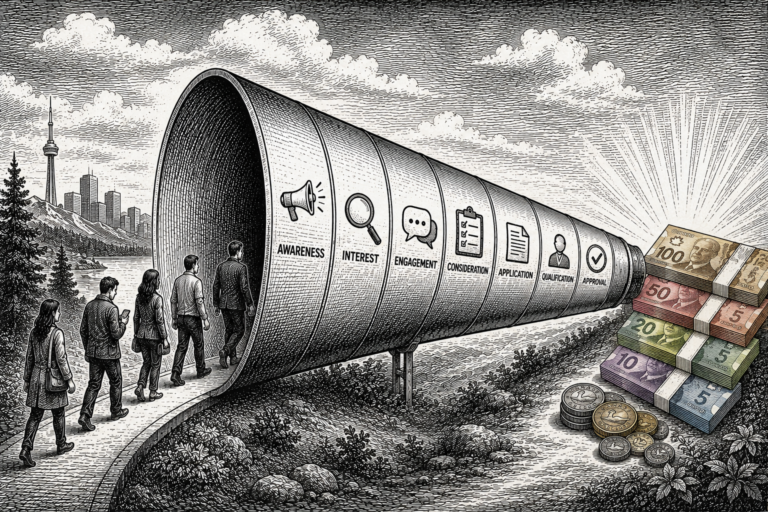
Lenders Are at the Top of the Funnel
Canada’s lenders are among the first to see how trade disruption is affecting the real economy. We see it in requests for larger operating lines, increased use of existing credit facilities, delayed equipment purchases, refinancing applications and businesses reconsidering planned investments. Lenders are at the top of this funnel, which means we can often see when a strong business is beginning to experience pressure before that pressure appears in employment figures, insolvency data or broader economic reporting.
This gives the government an important opportunity to work with the lending sector as an early-warning system and a delivery partner. Banks, credit unions, alternative lenders and fintech companies can help identify where financial pressure is emerging, which businesses remain fundamentally viable and what financing structures will allow them to continue operating, investing and employing Canadians. The government should bring lenders directly into the implementation and ongoing evaluation of its new support programs.
Speed Will Determine Whether the Programs Work
For these measures to succeed, they must reflect the speed at which a cash-flow problem develops. A business waiting to meet payroll, purchase inventory or pay a supplier cannot wait several months for a financing decision. Applications must be straightforward, eligibility requirements must be clear and decisions must be made quickly enough to address the immediate problem.
The decision to lower the minimum annual revenue requirement for BDC’s tariff-related programs to $1 million is particularly important because smaller companies tend to have fewer financing options and less capacity to absorb sudden increases in costs. But accessibility cannot be measured only by the number of businesses that technically qualify. It must also be measured by how easily a business can understand the available support, determine which program applies and receive a decision.
The government’s commitment to a fast-track, one-step review process through the Canada Strong Diversification Fund is a positive model. That same urgency should be reflected throughout the support package. The difference between an application taking several weeks and several months could determine whether a business retains its employees, continues investing or survives the disruption at all.
Use Public Support to Keep Private Credit Flowing
Government financing should complement, rather than replace, the private credit market. Canada’s lenders already have relationships with small and medium-sized businesses and understand their payment histories, cash-flow patterns, borrowing requirements and local markets. Those existing relationships can help government support reach businesses more efficiently while reducing duplication and unnecessary administrative work.
Government guarantees, first-loss structures and other risk-sharing mechanisms could also help lenders extend additional credit to businesses facing temporary tariff-related pressure. This would allow public capital to mobilize a larger pool of private financing instead of operating through a separate government channel. The objective should be to use government support strategically so that otherwise viable businesses can continue accessing credit through the financial institutions that already know them.
Separate Temporary Pressure From Structural Risk
Not every business affected by tariffs will require assistance, and not every company can be insulated from changing market conditions. The focus should be on viable businesses facing temporary pressure because of circumstances outside their control. A company may have a strong customer base, capable management and a long history of meeting its obligations, but if tariffs suddenly increase its costs or interrupt its orders, its current financial statements may no longer reflect the strength of the underlying business.
Targeted liquidity can give that company time to diversify its suppliers, enter new markets, renegotiate contracts or make productivity-enhancing investments. Without that bridge, a temporary disruption can become a credit event, which can then become a job loss. Across thousands of small and medium-sized businesses, those individual decisions can grow into a broader economic slowdown.
Important: Establish a Direct Feedback Loop With Lenders
The government should establish a formal feedback mechanism with Canada’s lending industry as these measures are implemented. Lenders can provide early insight into changes in borrowing demand, credit performance, delayed investment and sector-specific pressure. That information can help the government determine whether support is reaching the right businesses and whether eligibility requirements or delivery mechanisms need to be adjusted as conditions change.
The Canadian Lenders Association is prepared to work with Finance Canada, BDC and Canada’s regional development agencies to bring that front-line perspective into the process. This is not simply about distributing government money. It is about ensuring that each public dollar helps unlock additional private financing, protect employment and strengthen Canada’s long-term economic resilience.
The federal government has correctly recognized that a trade response must include a financing response. The emphasis must now move to execution, with programs that are fast, accessible and coordinated with the lenders that already finance Canadian businesses. Government must listen closely to what lenders are seeing in the market and remain prepared to adjust its response as economic conditions evolve.
Ensuring that otherwise viable companies can continue investing, retaining workers and accessing credit will be essential as Canada navigates this disruption. The tariff may begin at the border, but the government’s response must reach the balance sheet.
Five Key Points for Government
- Treat tariffs as a financing issue. Trade disruption quickly becomes a cash-flow, credit and investment problem for Canadian small and medium-sized businesses.
- Prioritize speed and simplicity. Clear eligibility, straightforward applications and rapid decisions will determine whether the programs prevent avoidable business failures.
- Work directly with lenders. Banks, credit unions, alternative lenders and fintech companies can identify emerging pressure before it appears in broader economic data.
- Use public capital to mobilize private credit. Guarantees and risk-sharing structures can expand the impact of government support and keep private financing flowing.
- Create an ongoing feedback loop. Government should use front-line lending data and experience to assess the programs and adjust them as economic conditions change.