
Crypto-Backed Lending Is Here. Now Canada Needs to Make It Work.
September 28, 2026
Canadian Lenders Association

Abstract: A lender’s claim on collateral has value only if it can be enforced when the borrower defaults. Crypto assets put that principle under pressure: they can move across borders in seconds, while their value can fall before a lender can act. Stablecoins introduce another question. Their usefulness for lending depends on the reserves, redemption rights and custodians behind them. At the next CLA Crypto-backed Lending Roundtable, we should ask what it will take to make digital collateral dependable under Canadian law, especially when markets are under stress.
A lender can admire the technology and still ask an old-fashioned question: If I advance this money, how do I get it back?
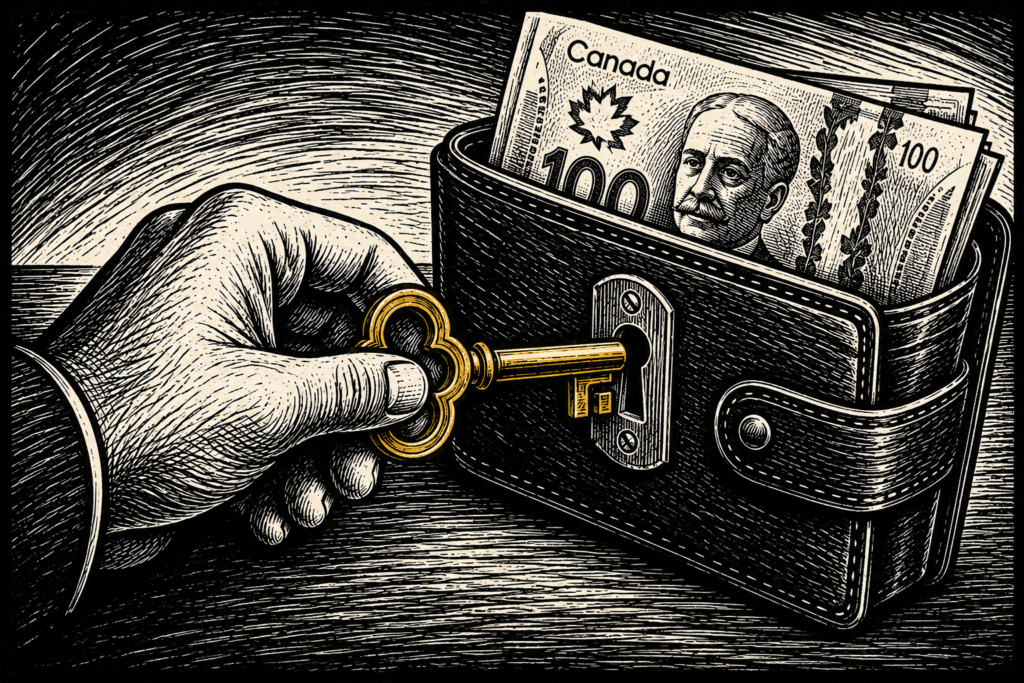
That question sits at the centre of crypto-backed lending. A borrower may pledge Bitcoin to obtain a loan without selling an asset they intend to hold. The loan proceeds may arrive in a stablecoin within minutes. It is a compelling proposition, particularly when compared with the paperwork and delays that still define much of conventional credit. But the speed of the transaction does nothing to resolve who controls the collateral, what happens when its price falls, or whether the lender can enforce its claim after a default.
The market is large enough that Canadian lenders should be paying attention. KPMG Canada reports that annual stablecoin transaction volumes exceed US$10.8 trillion and estimates that roughly 99.7 percent of stablecoins are denominated in U.S. dollars. That points to an opportunity to move funds more efficiently, alongside a Canadian question about currency exposure and dependence on payment infrastructure built elsewhere.
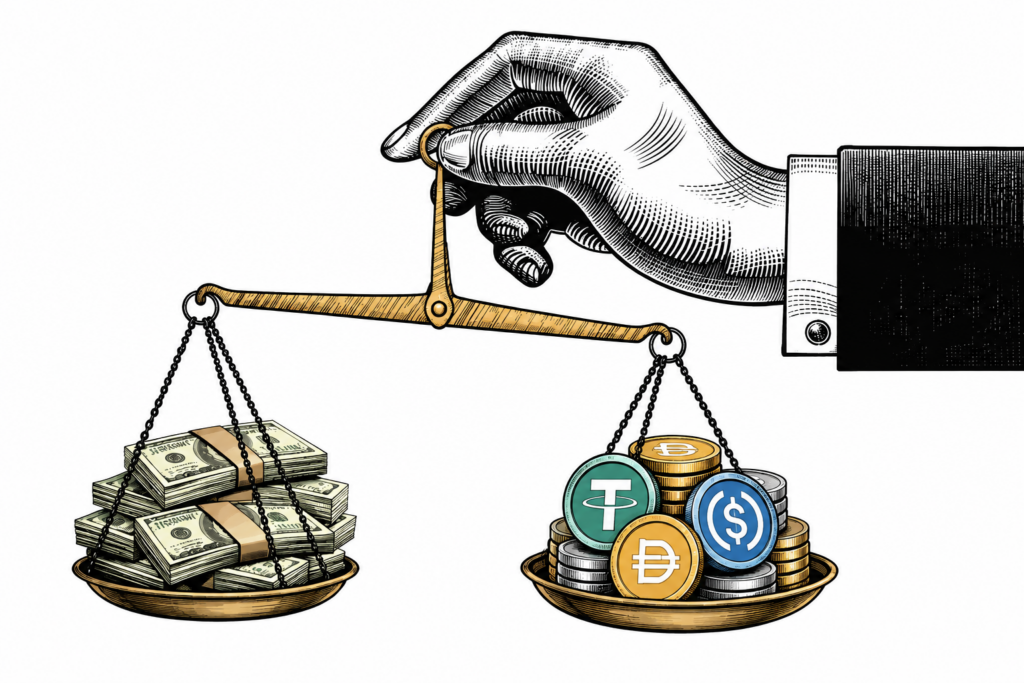
Coinbase has put the opportunity plainly. In a commentary on Canada’s emerging framework, Lucas Matheson, then Coinbase’s Country Director for Canada, wrote: “Stablecoins can transform how Canadians interact with money by reducing friction, speeding up transactions, and opening the door to new ways of doing business.” For lenders, that promise has a practical expression: faster disbursements, repayments and movement of funds between institutions. It also raises a second possibility. A stablecoin with credible reserves and reliable redemption rights may itself be an asset against which a lender is willing to advance credit.
There is already evidence of demand for the first model: borrowing stablecoins against a volatile crypto asset. Coinbase reported more than US$2.17 billion in USDC loan originations through its Morpho offering as of April 14, 2026, following its U.S. launch. It has since introduced the borrowing product in the UK. Those are not Canadian lending figures, but they show that borrowers will use this structure when someone makes it accessible.
We need to distinguish the risks within that structure. Bitcoin pledged against a stablecoin loan can lose value quickly, bringing margin calls and liquidation into play. A fiat-backed stablecoin pledged as collateral presents a different set of questions: who can redeem it, at what value, how quickly, and what happens to the holder’s claim if an issuer or intermediary fails? Calling both arrangements “crypto-backed” should not obscure the different work a lender must do before making either loan.
Research from the Bank of Canada offers a useful warning. Its study of the Aave V3 lending protocol found that some borrowers repeatedly borrowed against collateral to increase their exposure despite overcollateralization requirements. Approximately 80 percent of liquidated volume in the study period occurred during the ten largest liquidation waves. The findings describe one decentralized protocol, but the lesson travels well: collateral requirements matter, and so does what happens when many positions need to be closed at once.
Borrower understanding matters just as much. Research published by the Financial Consumer Agency of Canada found that four percent of survey respondents owned stablecoins, while only 21 percent could select an accurate definition of one. Among current and former owners, 49 percent reported a negative experience. If a lender expects a borrower to understand when pledged assets may be sold, the terms must be intelligible before a market decline puts them to the test.
Canada is making progress on the regulatory framework. The federal Stablecoin Act establishes a regime for fiat-backed issuers, with detailed regulations in development and the framework expected to come into force in 2027. OSFI has addressed crypto-asset exposures for federally regulated institutions. The Canadian Securities Administrators have warned that crypto-backed lending platforms may face securities-law obligations depending on their structure. Each step is useful. Lenders still need workable answers about control of collateral, priority of claims, custody, liquidation and recovery under Canadian law.
That is what I want the CLA’s Crypto-backed Lending Roundtable to tackle on October 15. I look forward to the insights of Eric Richmond, the new Country Director and CEO of Coinbase Canada, and Tracy Wood of Questbank. We represent lenders with different products, borrowers and risk appetites. We can bring them together with custodians, legal experts and technology providers to establish what responsible practice looks like in a loan agreement and in the systems that carry it out. The market has demonstrated that a crypto-backed loan can be made in minutes. Our job is to ensure that the lender and borrower both know what happens over the life of that loan, especially when things go wrong.
Key points
- Crypto-backed lending is already operating at scale outside Canada, including loans that advance stablecoins against pledged Bitcoin.
- Stablecoins could help Canadian lenders move loan funds and, where redemption and custody are reliable, potentially serve as collateral.
- Bitcoin-backed loans and loans secured by fiat-backed stablecoins require different approaches to collateral risk.
- Research on liquidation and consumer understanding shows why clear terms and strong controls must accompany faster lending.
- The CLA Roundtable should focus on practical standards for custody, valuation, borrower disclosure, liquidation and recovery.

 Crypto & Finance