


Gary Schwartz
President | Founder
Productivity, AI, and the Long Game for Canadian Lenders
Abstract: A recent Economist podcast revisited John Maynard Keynes and his famous prediction of a 15-hour workweek to frame a timely question: is artificial intelligence already delivering a productivity boom? Despite solid U.S. GDP growth of 2.2 percent in 2025 alongside weak employment growth of just 0.1 percent, the apparent productivity surge is partly explained by AI infrastructure investment and labour-market distortions rather than transformative efficiency gains. While roughly 40 percent of workers report using AI, average usage is only two hours per week, and although task-level efficiency gains range between 15 and 30 percent, the aggregate productivity impact likely amounts to just 0.25 to 0.5 percentage points. The core historical lesson is that breakthrough technologies, like electricity and computers, only generate major productivity gains once firms reorganize around them. AI adoption is rising, but structural redesign, not incremental tool usage, will determine whether a true productivity boom materializes.
I was listening to The Economist podcast this past week and one segment struck me as particularly relevant for our community. It revisited John Maynard Keynes and his 1930 essay predicting that by 2030 technological progress would reduce the workweek to 15 hours.
With 2030 only four years away, that outcome appears unlikely. But the podcast’s real insight was not about Keynes being wrong. It was about how long it takes for technological breakthroughs to produce measurable productivity gains.
The Data: Strong Output, Weak Hiring
The U.S. macroeconomic picture in 2025 looked, at first glance, like the beginning of an AI-driven productivity boom.
- Real GDP grew 2.2 percent over the year.
- Employment growth averaged roughly 15,000 jobs per month, translating to just 0.1 percent employment growth across the year.
- In the fourth quarter, real GDP came in at 1.4 percent, below expectations but still positive.
Historically, when output growth significantly outpaces employment growth, the gap implies rising productivity. Yet when the data were examined more closely, the explanation appeared more nuanced.
On the output side, heavy capital expenditures by artificial intelligence firms and infrastructure investment boosted real GDP growth.
On the employment side, distortions were evident:
- Tighter immigration policy constrained labour supply.
- A number of temporary workers exited the labour force.
- The workers disproportionately exiting tended to be concentrated in lower-productivity sectors.
This artificially widened the gap between GDP and employment. It was not a clean, economy-wide AI productivity surge.
Importantly, looking back to 1950, roughly one-third of years have seen a gap of approximately two percentage points between output growth and employment growth. In other words, last year’s divergence was not historically extraordinary.
Adoption Is Broad. Usage Is Shallow.
The podcast then drilled into three variables that determine AI’s real productivity impact: adoption, intensity, and efficiency gains.
Adoption: Across multiple studies, approximately 40 percent of working-age Americans report using AI at work.
Intensity: Only about 13 percent use AI every day. On average, workers use AI roughly two hours per week, equivalent to approximately 5 to 6 percent of total working time.
Efficiency Gains: Academic research across writing, legal, and technical contexts finds that when AI is used, task-level efficiency gains range from 15 to 30 percent.
Taken individually, these numbers appear compelling. But when combined, the macro effect becomes more modest. A simple back-of-the-envelope calculation multiplying: 40 percent adoption, wo hours per week usage, 15 to 30 percent efficiency gains suggests that AI may have increased overall productivity by approximately 0.25 to 0.5 percentage points over the past year.
That is not insignificant. But it is not transformative.
And even that estimate likely overstates reality because it assumes every minute of AI usage operates at full efficiency gain. All time saved is redeployed into additional productive work.
In practice, time savings are not always fully monetized. Workers may reduce effort, experiment, or simply absorb slack … The deeper lesson was historical.
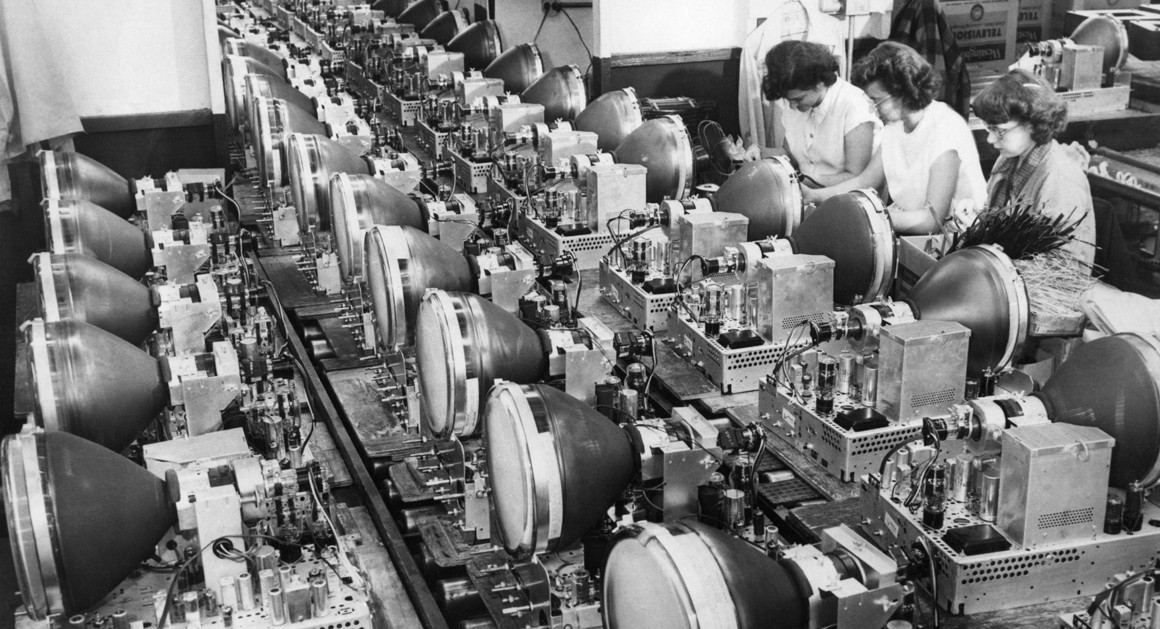
When electricity was introduced, factories initially replaced steam engines with electric motors and saw limited productivity improvement. The major gains came later, when production floors were redesigned around decentralized electric power.
Similarly, during the computer revolution, Robert Solow famously remarked that the computer age could be seen everywhere except in the productivity statistics. The real gains emerged only after firms restructured operations, supply chains, and management systems around digital technology.
Adoption precedes transformation. Reorganization determines the scale of the payoff.
Implications for Canadian Lenders
For CLA members, the message is clear. AI layered onto legacy underwriting, servicing, or compliance processes will produce incremental efficiencies. But it will not materially shift cost-to-income ratios or loss curves on its own.
The real productivity dividend will emerge when lenders:
- Redesign origination architecture around AI-driven identity verification and fraud detection
- Integrate predictive analytics directly into capital planning and provisioning
- Reconfigure servicing workflows around early-warning delinquency modelling
- Embed machine monitoring into compliance frameworks rather than post hoc review
This is not about adding tools. It is about redesigning operating models.
Our industry is navigating rate caps, evolving fraud patterns, regulatory scrutiny, and capital constraints. AI will help. The data suggest it already is, at the margin.
But the macro evidence is clear. A productivity boom does not materialize simply because 40 percent of workers are using AI for two hours a week.
Keynes’ 15-hour week was premature. Yet his broader insight remains valid. Technological progress expands productive capacity. The economic payoff depends on how quickly institutions reorganize around it.
For Canadian lenders, the strategic question is not whether AI works. The evidence suggests modest gains already. The real question is whether we will redesign early enough to capture the compounding effect when the structural shift finally arrives.
Five Key Insights
-
The GDP–Employment Gap Is Not Purely an AI Story
In 2025, U.S. GDP grew 2.2 percent while employment rose only 0.1 percent, but this divergence was influenced by AI capital expenditures and labour-supply distortions, not solely by productivity gains. -
Adoption Is High, Intensity Is Low
Around 40 percent of workers use AI at work, yet only 13 percent use it daily, and average usage is just two hours per week. -
Task-Level Gains Do Not Automatically Translate to Macro Gains
Even with 15 to 30 percent efficiency improvements at the task level, aggregate productivity likely increased by only 0.25 to 0.5 percentage points. -
History Suggests Reorganization Drives Productivity Booms
As seen during electrification and the computer revolution, major productivity gains occur when firms redesign workflows and business models around new technologies, not when they merely adopt them. -
Structural Change, Not Tool Deployment, Determines Long-Term Impact
AI’s transformative potential depends on institutional redesign. Without restructuring operations around AI, productivity gains will remain incremental rather than exponential.
Sign up for the CLA Finance Summit Series
