Credit Where Understanding Is Due
November 2, 2026
Gary Schwartz Canadian Lenders Association

Abstract: Canadians are being offered faster credit, instant financial explanations and increasingly seamless ways to borrow. Financial education must catch up. Understanding interest and inflation remains essential, but so does knowing how to question an algorithm, assess overlapping debts, protect personal information and verify a request for money. As AI handles more of the lending journey, human judgment takes on a different value: helping borrowers understand their commitments and weigh choices in the context of their lives. For the CLA’s certified lenders, this is an opportunity to pair technological efficiency with the clear explanations and trusted relationships that underpin responsible lending. The measure of progress is how confidently borrowers can make informed decisions.
Happy Financial literacy month everyone. 🎉 Nova Scotia is celebrating. The Nova Scotia Securities Commission’s website, has a short quiz. Do you understand interest, inflation and investment risk?
Plenty of people do. In its analysis of the 2024 Canadian Securities Administrators Investor Index, the commission reported that 44 per cent of Canadian respondents answered no more than three of seven questions correctly. In Nova Scotia, the figure was 52 per cent. The financial industry has become rather good at distributing products. Understanding them remains a less efficient business. Yet even a perfect score would leave a consumer with much to learn. What, exactly, counts as being good with money in 2026?
The arithmetic is familiar. The setting is increasingly peculiar. A shopper can acquire a loan while buying shoes, ask a machine to explain a mortgage and receive a call from a criminal who sounds like a relative. Each innovation places a new demand on the consumer’s judgment. Financial education needs a syllabus that reflects the economy people actually encounter.

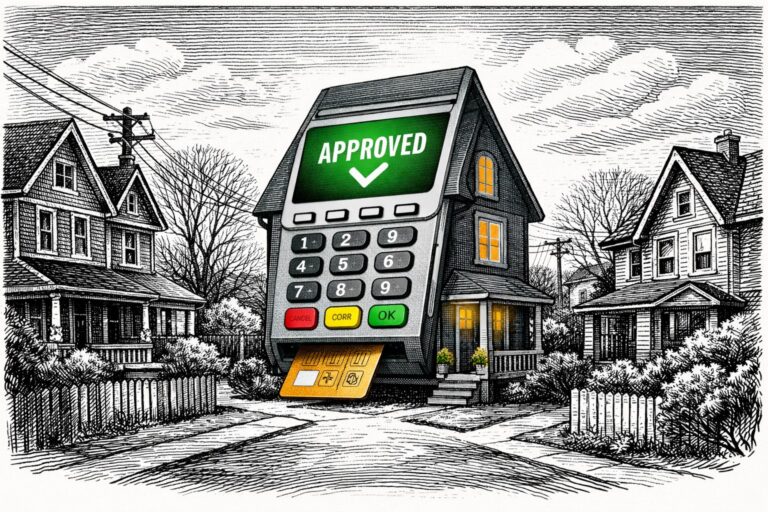
Start at the checkout. Buy now, pay later offers a useful way to spread the cost of a purchase. It also makes borrowing look remarkably like a payment preference. The Financial Consumer Agency of Canada supplies the clarification: these arrangements are credit. Depending on the terms, interest and fees can apply, and missing a payment can make an apparently inexpensive purchase rather less so.
The harder calculation concerns the household’s other obligations. Four purchases, each divided into manageable instalments, still draw on the same paycheque. A consumer may understand every agreement separately and misunderstand the position entirely. Financial education should teach people to assemble the whole picture: every payment, every due date and the amount left when they have all been met. Approval for another purchase is a poor substitute for that calculation.
Then there is the new financial explainer. AI can translate an obscure term into ordinary language and help a borrower arrive at a lender with better questions. This is a considerable improvement on pretending to understand. But FCAC warns that AI can also produce incorrect or unsuitable information and expose users to privacy and security risks.
The difficulty is that a convincing explanation and a correct one can sound much the same. Consumers need to ask where an answer came from, whether it applies in Canada and whether it accounts for their circumstances. An assistant that explains a mortgage elegantly may still misunderstand the mortgage. The ability to question advice is becoming as useful as the ability to obtain it.
Personal data demands similar attention. Before uploading a bank statement or granting access to an account, consumers should understand who receives the information, what they may do with it and how access can be ended. A consent button is easy to design. Informed consent requires rather more effort from the company requesting it.
Fraudsters, meanwhile, have acquired better production tools. The Competition Bureau warns that AI can be used to imitate individuals, fabricate investment promotions and clone voices. Financial education must therefore teach a habit that digital commerce often tries to eliminate: hesitation. An unexpected demand for money deserves independent verification, however familiar the caller sounds and however urgent the request appears.
For the CLA’s certified lenders, the question is becoming more interesting: as technology handles more of the borrowing journey, where does human judgment matter most? Our upcoming summit panel, “The Last Human in the Mortgage Loop,” raises a question that extends across lending. From financing a car to securing a business loan, borrowers can increasingly apply, submit documents and receive a decision without speaking to anyone. Yet a loan can be approved before the borrower has fully understood the commitment.
This is where our members can demonstrate the value of responsible lending. AI can explain a repayment schedule. An experienced lender can recognize the hesitation behind a question, explore how repayments fit a household budget or a company’s cash flow, and help weigh competing priorities. As processing becomes automated, the ability to make sense of a borrower’s circumstances becomes more valuable.
Financial literacy belongs in that conversation. Does the borrower understand the total cost, the repayment obligations and the options if circumstances change? Someone who understands every term may still face a loss of income, an unexpected expense or a difficult trading period. Knowing when to explain and when to explore practical options requires judgment. The last human in the lending loop may turn out to be the person who makes the technology’s efficiency worth having.
This year’s federal campaign urges Canadians to “Talk Money.” A sensible invitation. The conversation should cover the loan hidden in the shopping journey, the assumptions behind the machine’s advice and the identity of the person requesting a transfer. It should include what financial institutions could explain better.
Nova Scotia’s quiz is a useful place to begin. Its questions test whether people understand what money does over time. The new economy adds another examination: whether they understand what others are trying to do with their money.
Happy Financial Literacy Month!
Five key points
- Interest, inflation and investment risk remain the foundation of financial literacy.
- Credit education should help consumers understand all their repayment obligations together.
- AI literacy includes checking sources, questioning recommendations and protecting personal information.
- Fraud prevention requires independent verification, even when a voice or image appears familiar.
- Lenders should build clear explanations into products and measure customer understanding.