

Assets to Intelligence: Rewriting the Economics of Fleet Finance
March 22, 2026
Roam

Assets to Intelligence: Rewriting the Economics of Fleet Finance
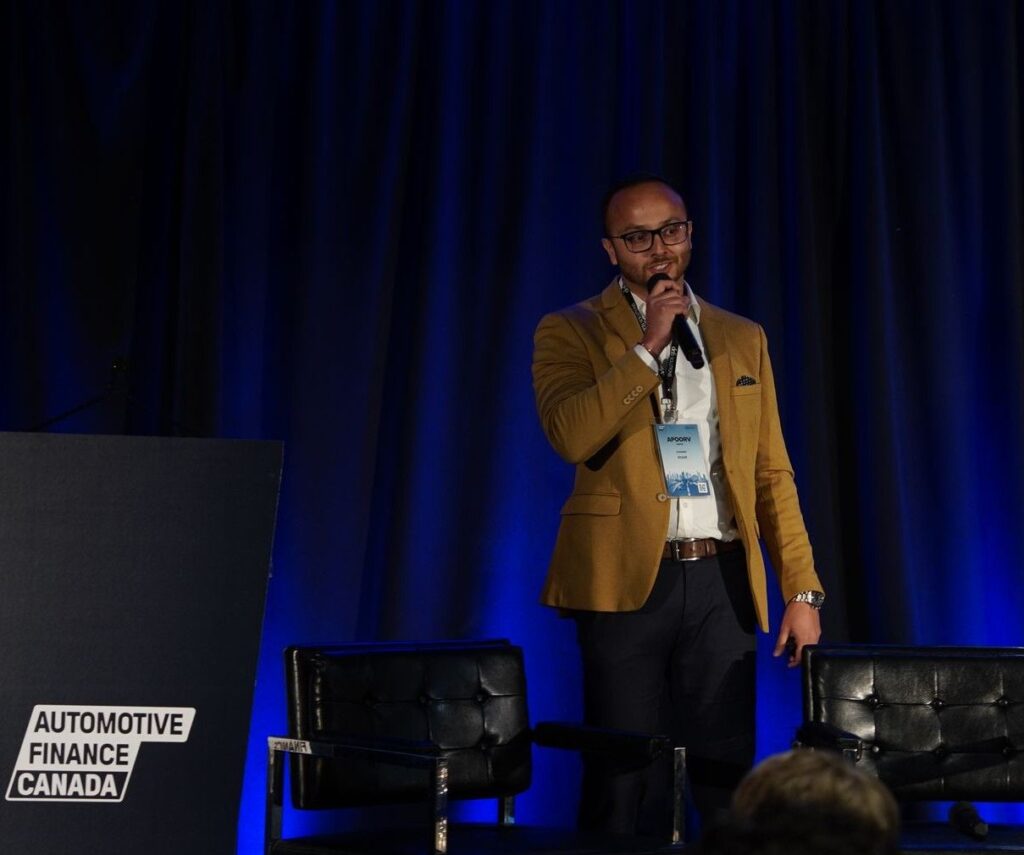
Abstract: In this keynote, Apoorv Gupta (CEO, Roam) argued that commercial leasing is moving from fixed contracts built on historical averages to intelligent contracts powered by real-time vehicle data. Drawing on Roam’s own operating experience and internal fleet management platform, Gupta explored how electrification, software-defined vehicles, and rising compliance expectations are converging to reshape leasing economics. His core thesis was that as vehicles generate richer telematics, maintenance, behavioral, and market-value data, lenders, lessors, and insurers will no longer need to wait until lease-end to discover risk. Instead, they will be able to continuously monitor performance, price risk dynamically, reduce downtime, and build a more transparent model where trust, predictability, and shared data become competitive advantages.

👉 Check out the full VIDEO here.
Apoorv Gupta: Roam operates in the space between daily rental and long-term leasing. We provide vehicles to consumers and businesses looking for shorter-term commitments, paired with insurance, roadside assistance, and mobile preventive maintenance. This is my second time building in vehicle subscriptions, and a lot of what I’m talking about today comes from actual testing we’re doing inside Roam using our own fleet management software.
The concept is simple: commercial leasing needs to move from fixed contracts to intelligent contracts.
Apoorv Gupta: Imagine two pickup trucks. Same year, make, model, trim, cap cost, interest rate, residual rate, and monthly payment. On paper, they are financed the same, insured the same, and regulated the same.
But Truck A is driven predictably, maintained on time, rarely idles, and operates within its intended design limits. Truck B is overloaded, poorly maintained, constantly idling, and pushed beyond what it was built to do.
Everyone in this room knows which truck they would rather have on their balance sheet. The problem is that historically, we haven’t had timely enough information to distinguish the two while the lease is still active. We only find out at the end—when one vehicle comes back as expected and the other produces thousands of dollars in surprise losses.
That doesn’t have to be the model going forward.
Apoorv Gupta: Today’s vehicles are transmitting thousands of data points every day. They tell us about condition, usage patterns, and driver behavior. For the first time, we can move away from assumptions and start financing vehicles based on how they are actually performing.
Once capital, risk, and regulation begin reacting to real-time data rather than historical averages, the unit economics of commercial leasing fundamentally change.
Apoorv Gupta: There are three irreversible trends driving that shift.
The first is electrification and autonomous vehicles. Whether fully electric, plug-in hybrid, or hybrid, vehicles are becoming more complex upfront but often cheaper and more predictable to maintain when preventive maintenance is done properly. There are still residual value questions, especially because many EVs haven’t been in market long enough to establish stable resale histories, but the maintenance and lifespan economics are already changing.
The second is the rise of software-defined vehicles. Cars are increasingly “software on wheels,” constantly communicating with operators and generating large volumes of usable data.
The third is increased regulatory compliance. As EVs and autonomous technologies enter fleets and more operational data is exchanged, compliance stops being a periodic event and starts becoming continuous.
Apoorv Gupta: The leasing model we use today was built for static assets. You set a contract using historical averages, expected resale values, fixed amortization schedules, and then largely leave it untouched until the vehicle comes back.
But the asset itself is no longer static.
A single vehicle can have 100 to 200 sensors. It may generate anywhere from hundreds of gigabytes to multiple terabytes of data in a single day. That means the asset is changing, communicating, and creating intelligence continuously—while we are still managing it through a fixed paper contract.
That disconnect is what intelligent contracts are designed to solve.
Apoorv Gupta: The idea is to create living risk models.
Instead of setting a payment once and waiting until lease-end, monthly payments and risk assumptions can evolve based on changing vehicle condition, usage behavior, residual value, and market value.
That means incorporating things like harsh acceleration, aggressive turning, missed maintenance, accident history, overuse, and other factors that directly affect lease-end value. It also means recognizing that market value is not static. We saw this clearly during the supply shortages in 2021 and 2022, when some vehicles were being resold above original new prices.
If both the residual outlook and the market value are changing, then the contract should be able to respond before losses materialize.
Apoorv Gupta: The reason this matters is that it allows early intervention.
Instead of giving customers bad news at lease-end and telling them they owe thousands of dollars because the asset underperformed relative to the contract, you can make those adjustments gradually and transparently over time.
That creates predictability. And when outcomes become more predictable, capital becomes cheaper.
That’s why the leases of the future won’t just be fixed agreements. They’ll be contracts that self-correct.
Apoorv Gupta: The same logic applies from an insurance perspective.
We’ve talked about usage-based insurance for years, but the quality of data is now becoming much more actionable. It’s no longer just harsh braking or speeding. Fleets can now identify things like tailgating, repeated blind-spot violations, and other behavioral indicators that improve risk scoring.
When you combine telematics with corrective coaching and operational feedback, crash rates can decline materially. And for fleets with hundreds or thousands of vehicles, that reduction translates directly into lower loss costs, lower downtime, and more stable economics.
Apoorv Gupta: Preventive maintenance is another area where this becomes powerful.
Vehicles are effectively telling us when something is wrong before a costly failure occurs. That means fewer last-minute repairs, less downtime, and better asset reliability.
For businesses using fleets to generate revenue, downtime is one of the most painful hidden costs in the system. If better data can reduce emergency repairs and keep more vehicles operating, the financial impact is significant.
Apoorv Gupta: From a lender, lessor, or insurer perspective, this is where data-sharing becomes especially important.
Each party in the transaction holds part of the picture. The lessor sees usage. The lender sees financing performance. The insurer sees risk behavior. The customer sees operational reality.
Right now, that data is heavily siloed. But if it could be shared meaningfully across organizations, it would help every party reduce avoidable losses and move from a reactive model to a proactive one.
That’s why this is not just a technology race. It’s an operating model shift.
Apoorv Gupta: Compliance changes too.
Nobody enjoys audits, quarterly covenant checks, or trying to reconcile where a fleet sits relative to risk after the fact. But with the right reporting systems, compliance can happen in real time.
At Roam, we already have internal dashboards that give us a strong monthly view of where our vehicles sit relative to the market. That kind of transparency builds trust. And when compliance is built into the system itself, that trust can scale.
Apoorv Gupta: Over the next decade, the market will favor lessors and operators that do three things well.
First, they will underwrite behavior, not just the asset.
Second, they will price risk continuously, rather than reviewing portfolio health only through annual or quarterly processes.
Third, they will build platforms instead of point solutions—systems where data can move across lenders, insurers, lessors, and customers instead of sitting in isolated silos.
Trust will become one of the most important assets on the balance sheet.
Apoorv Gupta: So if we go back to Truck A and Truck B—same truck, same lease, same traditional financing logic—the real question is whether we continue managing them as averages or start managing them as the living systems they already are.
Because the future is not really about whether intelligent contracts happen.
It’s about who leads the transition first.
Here are 10 key insights from the keynote:
Commercial leasing is moving from fixed contracts to intelligent contracts
Static agreements based on historical averages will increasingly give way to contracts that respond to real-time asset behavior and market conditions.
Two identical vehicles can create very different balance-sheet outcomes
Usage, maintenance discipline, idling, overloading, and driving behavior materially affect residual value and lease profitability.
Vehicles are no longer static assets—they are data-generating systems
Modern vehicles can produce enormous volumes of operational data, creating a foundation for more dynamic underwriting and risk management.
Electrification is reshaping maintenance and lifecycle economics
EVs may carry higher upfront costs and residual uncertainty, but they often offer more predictable maintenance and longer usable lifespans.
Software-defined vehicles are changing leasing economics
As vehicles become “software on wheels,” lessors gain access to operational intelligence that wasn’t historically available during the lease term.
Real-time data enables early intervention instead of lease-end surprises
Instead of waiting until a vehicle is returned to identify excessive wear, missed maintenance, or underperformance, lessors can adjust earlier and more transparently.
Usage-based insurance is becoming more predictive and more actionable
Behavioral data like tailgating, blind-spot violations, and driving aggression can improve risk scoring and reduce crash rates when paired with corrective action.
Preventive maintenance reduces both cost and downtime
Using real-time vehicle health data to intervene earlier can reduce emergency repairs and improve fleet uptime.
Compliance is shifting from periodic to continuous
As more vehicle and operational data becomes available, reporting and covenant monitoring can become embedded into day-to-day fleet management.
The next decade will reward data-sharing platforms, not siloed point solutions
The lessors, lenders, and insurers that can turn fragmented data into shared visibility will be best positioned to price risk accurately and build trust at scale.
Sign up for the CLA Finance Summit Series










 Event Insights