
 Event Insights
Financing Fraud: Fireside Chat with MPP Zee Hamid
March 22, 2026


Financing Fraud: Fireside Chat with MPP Zee Hamid
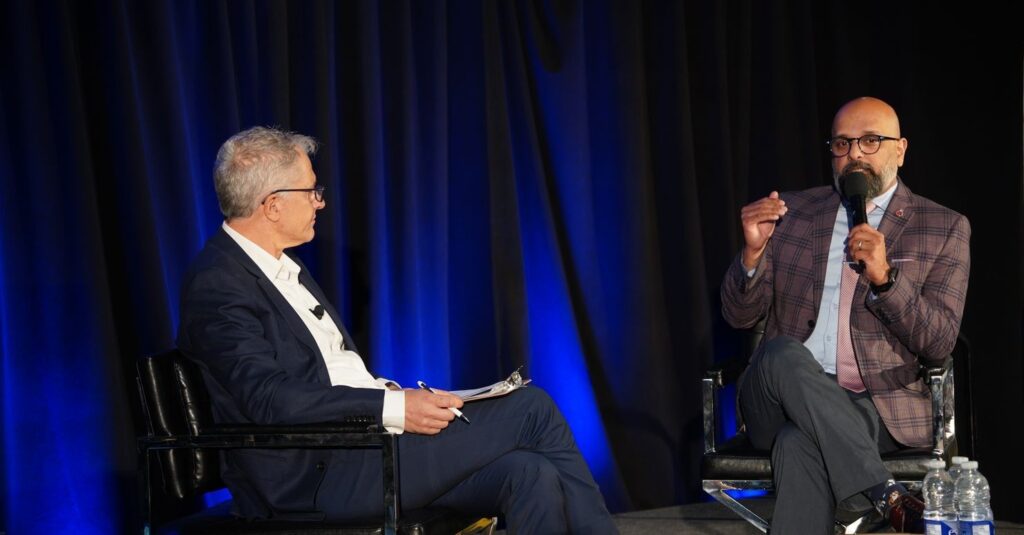
Abstract: In this Canadian Lenders Association session, Gary Schwartz (President | CEO, Canadian Lenders Association) moderated a discussion with Honourable Zee Hamid (Associate Solicitor General of Ontario, with responsibility for Auto Theft and Bail Reform, Legislative Assembly of Ontario) on the growing sophistication of organized auto theft and vehicle-related fraud in Ontario. The discussion explored how auto theft has evolved from isolated property crime into a sophisticated, decentralized criminal enterprise linked to guns, gangs, drugs, and human trafficking; how repeat offenders and bail reform have shaped the government’s response; and where lenders, insurers, dealers, data providers, and government can work more closely together. The core message was clear: Ontario has made progress, but stopping fraud earlier will require stronger identity and VIN verification, smarter systems, and more targeted data sharing across the ecosystem.

👉 Check out the full VIDEO here.
Gary Schwartz: Your official title is Associate Solicitor General of Ontario, with a focus on auto theft and bail reform. For this audience of lenders, technologists, and data providers, what has surprised you most about the nature and scale of auto theft and auto fraud in Ontario since taking on this role?
Honourable Zee Hamid: The sophistication of it. When I was younger, auto theft was often teenagers taking cars for joyrides. It’s not that anymore. It’s not even just property crime anymore. These are sophisticated international criminal organizations running very sophisticated operations.
You might have a young person get a text message, show up at a location, get in a car with people they’ve never met, receive a list of homes and specific vehicles to steal, and then never see those people again. If they get arrested, they often don’t know who organized it or where the vehicle is ultimately going. That’s how decentralized it is.
What also surprised me is how connected it is to other forms of crime. The proceeds from auto theft don’t just end there—they fund guns, gangs, drugs, human trafficking, and other serious criminal activity. And these groups adapt quickly. When we closed one export-related loophole, we saw a rise in VIN fraud and vehicle cloning. We tightened things in Ontario, and then activity started shifting to places like Alberta. So this is a sophisticated and adaptive problem, which is why we need all partners working together.
Gary Schwartz: At CLA we talk a lot about the “fraud tax”—the idea that the consequences of theft and fraud ripple down to borrowers, lenders, and insurers alike. How can the industry work more closely with you, and with the Ontario government, to reduce fraud across the value chain?
Honourable Zee Hamid: That’s an excellent question. Let’s talk about the fraud tax. Back in 2023, the insurance industry estimated there was about $1 billion in write-offs because of auto theft. Everyone ends up paying for that through higher insurance premiums and more friction in the system.
On the government side, we’ve done a lot on bail reform because one of the things that surprised me most was how much repeat offending was involved. We saw cases where people were arrested, released on bail within 24 hours, and then reoffended almost immediately. I met Durham Police over the summer and they described gangs where some individuals had been arrested seven or eight times.
The federal government has brought forward legislation to strengthen bail reform, and we hope that passes soon. On the provincial side, we’ve also implemented a real-time bail compliance dashboard. It began with firearm-related offenses, but now it extends to other high-risk repeat offenders. Right now around 90% of police forces have access to it, and our goal is to get to 100%.
But beyond bail, one of the biggest issues is that many of our systems still assume everyone is acting in good faith. Most people are—but those assumptions no longer hold when you’re dealing with sophisticated fraud. We need stronger identity verification, stronger VIN verification, and better systems that prevent fraud from happening in the first place. That’s where industry can really help.
Gary Schwartz: You mentioned bail reform, but is there anything else on the enforcement side—bail-related or otherwise—that could materially affect fraud risk and recovery outcomes in the near term?
Honourable Zee Hamid: Yes. Bail reform will have a meaningful impact, but these organizations are sophisticated, and every time we close one loophole, they find another one. Provincially, we usually move two justice bills a year—one in the fall and one in the spring—and that helps us adapt quickly.
In our last bill, we tackled some of the electronic key fob devices that were easily purchased online and used to steal vehicles. We also increased penalties for knowingly providing false VIN numbers, and we moved heavily on identity fraud. There’s more work coming. We had a justice bill introduced last fall that should pass this spring, and we’re already working on another one.
So yes, there’s a lot still happening on the enforcement and legislative side. We’re trying to move fast because the criminal organizations move fast.
Gary Schwartz: We’re an ecosystem industry. There are people here who generate data, consume data, and build products from it. From your seat, what specific data or intelligence sharing would most disrupt organized auto fraud? And how can we work with you more fluidly?
Honourable Zee Hamid: Let me give you a very specific example. There was a case involving a ghost vehicle—a vehicle that never existed. A VIN was created, the vehicle was registered, a loan was issued, and then that ghost vehicle got into an accident with another vehicle that also never existed. Storage fees were charged, body shop fees were charged, insurance premiums were paid out, and then both vehicles were “stolen” a few weeks later. But neither vehicle had ever existed.
That’s where data sharing matters. I’m not talking about broad fishing expeditions. I’m talking about targeted, meaningful data sharing across lenders, insurers, dealers, and government so we can maintain system integrity.
The better news is that auto theft has been coming down. In 2024, theft levels were down around 17–18%, depending on how you calculate it. We don’t yet have official 2025 numbers, but I suspect we’ll see another meaningful reduction. But these numbers are coming down from a very elevated base, so we are not where we need to be yet.
The key is that we can’t stop now. As criminal organizations adapt, we have to adapt faster. And data sharing is a huge part of that, because none of us can solve this alone. My goal is not simply to recover stolen vehicles after the fact—it’s to stop the fraud from happening in the first place.
Gary Schwartz: There are a lot of smart people and fraud solutions in this room. How do we actually work with you? Do we bring leaders together? Do we set up a meeting? What does that collaboration look like in practice?
Honourable Zee Hamid: Yes—absolutely. Email me. I want to learn from the people in this room because there are areas where you are the experts and you see things that government doesn’t see.
I come from a technology background myself. I studied mathematics and computer science at Waterloo, then worked at Microsoft, Amazon, and DoorDash, and had startups of my own before getting into politics. So I love technology and process solutions. If there’s a technology solution that can solve a problem, or a better process that can close a gap, I absolutely want to hear it.
Because good intentions are not systems. We need systems that prevent bad actors from exploiting lenders, insurers, consumers, and government processes. That’s what really matters.
Audience Member: In the UK, we already have a number of data sharing arrangements, especially on the insurance side. We also work in technology and would love to help.
Honourable Zee Hamid: I’d love to learn more. Our privacy laws are quite a bit stricter than in the U.S., and likely stricter than what many people expect, so we do have to work around that. That’s why I keep emphasizing targeted, meaningful data sharing with a clear purpose. But yes, I’d absolutely welcome that conversation.
Gary Schwartz: Before we let you go, is there one issue you want this room to take away and push forward?
Honourable Zee Hamid: Yes. On immobilizers and anti-theft technology, Canada needs to do better. The UK updated its standards last February, and the EU updated theirs in 2021. Our Canadian standards were first published in 2005 and came into effect in 2007. We can’t go twenty years without updating them.
Today, you can still buy cheap devices online that can unlock vehicles outside. We need the federal government to update those standards—not just once, but on a regular cycle, maybe every five years as technology changes.
We don’t need to reinvent the wheel. We can look at the UK or EU, take what works, and require the same anti-theft protections here. Automakers already sell into those markets. Canadians should expect the same level of security.
Here are 10 key insights from the session:
Auto theft is no longer a simple property crime
Ontario is increasingly dealing with sophisticated, decentralized criminal organizations—not isolated thieves or opportunistic actors.
The proceeds of auto theft fund broader criminal activity
Vehicle theft is often connected to guns, gangs, drugs, human trafficking, and other serious organized crime.
Repeat offending has been a major enforcement challenge
The government has seen repeated cases of offenders being released quickly and then reoffending almost immediately.
Ontario is using technology to respond faster
The province has implemented a real-time bail compliance dashboard that gives police better visibility into high-risk repeat offenders.
Old “good faith” processes no longer hold up
Systems that worked five or ten years ago are increasingly vulnerable because fraudsters exploit identity, registration, and VIN verification gaps.
Targeted data sharing is one of the biggest opportunities
The province is not asking for broad surveillance, but for focused, meaningful data sharing that helps detect and prevent fraud earlier.
Ghost vehicle fraud is real—and deeply damaging
Fraud can now involve entirely fabricated vehicles, fake accidents, false storage and repair bills, and insurance payouts on assets that never existed.
Ontario has made progress, but the threat remains elevated
Auto theft has declined from peak levels, but the government stressed that the numbers are still too high and criminal organizations continue to adapt.
Technology and process reform must work together
Better tools alone are not enough—government and industry also need better operational systems and verification workflows.
Canada’s anti-theft standards are outdated
The province wants the federal government to modernize immobilizer and anti-theft standards more frequently so vehicle security keeps up with evolving technology.
Sign up for the CLA Finance Summit Series