
 Event Insights
Canada’s Next Decade of Investing
June 15, 2026
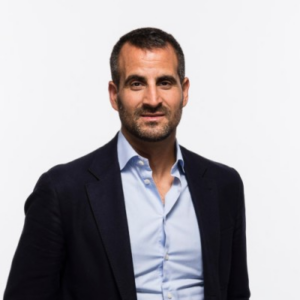
Som Seif Purpose Unlimited
How Strategic Investment Can Drive Innovation, Productivity and Long-Term Growth in Canada
Abstract: In this keynote on the future of financial services, Som Seif (Founder & CEO, Purpose Unlimited) challenged the industry to move beyond complacency, product silos, and “average economics” and instead rebuild around the customer. Seif argued that financial services has extraordinary scale, economics, and mission, but too often remains a “sea of the same” because incumbents are comfortable, infrastructure has been ignored, and organizations are built around products rather than people. From customer-first planning and data-native operating models to AI, tokenization, and non-jurisdictional banking, the message was clear: the future is already arriving, and leaders must choose whether to protect the status quo or go build something better.
Som Seif: I want to start with a very basic principle. Why do I love the financial services industry, and why should you all love the financial services industry?
It is a wonderful industry to build in. If you think about the basics, this industry is fragmented, it has phenomenal economics of scale, and it has a very high mission that we do not talk enough about: ultimately helping Canadians and the Canadian economy succeed.
But there is a reason why it is fragmented. It is because it is a sea of the same.
It is an industry that does the same thing over and over and over again. There is not enough differentiation. And that is the opportunity. As big as this industry is, and as much as the market is growing because the economy is growing, people are saving, people are investing, and people are building, no one is standing up and taking ownership.
That is a huge opportunity.
Som Seif: When I sit back and think about how the industry operates today, there is a reason it sits exactly how it does. Why is no one standing up and taking ownership? Because many executives running this industry today think today is the best day it has ever been. Meaning, they would love for nothing to change.
That is a fundamental problem.
We live in a business with huge economics, great scale, and phenomenal agency. But disruption means we have to restructure. We have to rethink what we do. That is the challenge many in the industry face today.
At the same time, the structure of the industry enables major incumbents to protect the status quo and create headwinds for challengers: those who wake up every day trying to tell a different story, create different meaning, and win different customers.
Som Seif: For the last 30 or 40 years, most of the industry has focused on the front end of the business: the customer-facing part, the products, the rates, and the services.
But many have ignored the less exciting parts of the industry: the pipes, the infrastructure, and the processing.
The reality is that infrastructure has been ignored. And that infrastructure has led to a significant challenge in being able to do anything of real, meaningful change.
Another important principle for me is unit economics. I came into this industry and everyone talked about average economics, meaning that, on average, we make money. But when you think only in averages, you start to believe that bigger is always more profitable and smaller is not.
That mindset shapes strategy, business plans, and decision-making. But the way you actually run a business is by understanding unit economics. You need to understand the infrastructure, the back end, the process, the service levels, and what it actually takes to deliver.
Som Seif: The other issue is that this industry can be very self-centred. It is about the company, not the client. It is not about how the customer is thinking, what their problem is, what their job is, or what they are asking you to do.
It is about how they have to find a way to interact with you.
For customers, that creates seams. It feels clunky. If they want to do a transaction, they may have to open an account somewhere else. If they want to transfer money, they may need to use a different app. If they want a loan, they may need to fill out another application and re-enter all their data.
Now compare that to the best industries and the best customer experiences. When you enter those environments, it just feels right. Then compare that to what financial services customers experience every day.
We often apologize to ourselves and say, “That is just the way it is.”
My message is: that is not good enough.
The hard work we need to do as an industry is to change it all around.
Som Seif: The starting point is the job to be done. For me, that means looking at the customer journey. It is a consumer’s life journey and their interactions with financial services.
For the first part of someone’s life, other people are making financial decisions for them. Then they get their first paycheque, start to accumulate, and begin to need more from financial services. Around 20 years before retirement, they start to think about something more than accumulation. They start thinking about longevity and whether the capital they have built will meet their long-term needs.
There are two major inflection moments in a person’s life: the day they get started, and the day they move from accumulation into the next stage.
But that is not how most financial institutions are structured. Banks and incumbents are usually structured as products and profit-and-loss statements. Those organizational design choices make it harder to put the customer at the centre and solve the real problem.
Som Seif: The greatest financial product ever built in our industry was the defined benefit pension plan.
Why? Because the bargain was simple: you go to work, earn an income, and the organization helps take care of your savings and retirement. It was designed around an outcome.
And then the industry broke that product apart, put it into pieces, and called it choice.
But often, what we call choice is really designed for the benefit of the industry. Our industry operates in agency, between those who have money and those who need money. The wider that spread is, the more money there is to be made. The tighter that spread is, the more efficient you have to be.
Choice can sound good, but it can also create more agency.
Som Seif: To build a customer-first organization, there are two things that matter.
First, you need a mindset shift. You need to rethink how the company is designed, how people think about their jobs, and how the culture understands what it is there to do.
Second, you need something unsexy: data.
Being data native does not mean you went to the cloud. A data-native organization is one where information flows freely through the company. It does not get stuck on someone’s desktop, in one of several CRMs, in a business unit, in someone’s head, in a meeting, or in a document.
Information has to flow through the organization.
That matters because data-native organizations enable us to think about the customer and reorient the organization to be customer-first. The goal should be to take the seams customers feel and bring them in-house. Force the organization to deal with the seams, not the customer.
And data also feeds one of the most important technological revolutions we are facing in our lifetimes: AI.
You cannot truly think about AI if you are not a data-native organization.
Som Seif: The first major shift we should be planning for is putting planning at the centre of gravity of the consumer relationship.
Today, we have fragmented everything we do for individuals and called it choice. We have asset management firms, wealth advisors, planners, insurance providers, and lenders all operating around the customer.
But the person in the middle is a human being going on a life journey and asking one very simple question: am I going to be okay?
That is all they are asking.
They do not care what the S&P 500 did last week. They do not know whether one portfolio manager is better than another. They may trust you, but they do not really know.
If we reoriented the industry and put planning at the centre of everything we do, it would become the first thing, the last thing, and the way we communicate the job we do. Our job is to help answer that simple question at every part of a person’s journey: am I going to be okay?
Whether someone is 25, 45, 75, or 95, that is the job.
Som Seif: Think about why people value personal trainers. The trainer does not show up and say, “I am smarter than you.” They show up when you do not want to wake up. They are an accountability partner. When you are on your fifth rep, they make sure you do your sixth. When you do not want to take the extra kilometre, they make sure you do it because you have aligned on a set of goals.
Their entire job is to make sure you meet and achieve your goals.
That is what our industry should feel like.
When it feels like that, customers will believe they are getting value. We can talk about fees and commoditization, but customers are willing to pay for value. The only thing that matters is whether we are delivering value and whether customers are willing to pay for it.
Som Seif: The second major shift is AI.
Everyone in our industry is both afraid of and excited about AI. AI is a phenomenal opportunity. It will touch every component of what we do: the delivery model, customer choices, the way customers interact with us, infrastructure, processing, and every layer of the business.
But there are two types of AI users.
One is the organization that uses AI cosmetically. It tells people to do what they were already doing, only a little faster. That may give you some time back, but most organizations will not know what to do with that time.
Data-native organizations look different.
They embed AI into the way they work and ask from first principles: we know we do it this way today, but how should we have done it? What is the job to be done? How would we redesign the entire way we operate?
That is an AI-first organization. And it does not happen unless you get your data right.
Som Seif: AI will also change the delivery model.
Our industry is in the business of trust. Trust is a layer. Ten years ago, that layer was thick. Through technology and automation, it is getting thinner and thinner. The question is: how thin does it get?
Some people believe AI could take that trust layer to zero. And if we continue to operate as an industry that is not customer-first, it may go to zero. AI may simply become good enough relative to what customers have today.
That would be a shame if we let trust break down because we failed to change.
The opportunity is to use AI to focus more precisely on the most important part of the delivery model. What would it look like if most of your people’s time was focused exclusively on the customer and solving problems on their behalf?
That layer may be thin, but it can be very powerful.
Som Seif: The third major shift is tokenization and infrastructure.
The back end of this business has huge opportunities to be restructured. A lot of people hear tokenization and think Bitcoin or crypto. But tokenization is much broader than that.
Tokenization is how two people in a trustless environment can interact with each other. That is exactly what the infrastructure of our industry does. It enables two people in a trustless environment to interact around value, trusted layers, documentation, agreements, or anything else.
Stablecoins may be one of the first major use cases that gets attention, but this is not about another money market fund on a blockchain. This is about breaking down the barriers of how financial solutions, payments, technology, infrastructure, and money movement operate.
It will be powerful.
The first iteration of fintech was exciting, but much of it was cosmetic. It created better customer experiences and better applications, but it got stuck because it still sat on existing rails: Visa, bank payment systems, SWIFT, or bank deposits.
Tokenization can change that.
Som Seif: The fourth major shift is non-jurisdictional banking and non-jurisdictional financial services.
Today, we are a series of jurisdictions. Everyone operates inside the borders of those jurisdictions. It started with community banks, became national banks, and then became global banks. But many global banks are really global brands with a series of jurisdictional banks around the world.
Customers still interact with those banks as separate entities. That is jurisdictional banking.
Non-jurisdictional banking sits above jurisdictions.
Tokenization, blockchains, and infrastructure will play a role here. True non-jurisdictional banking will be a single experience that is fluid anywhere in the world. It will not matter whether you are in Brazil, Korea, or Canada. Your ability to move seamlessly will be powerful.
This will challenge regulators. Their entire model is built around controlling borders. But it will also be phenomenal as we move from social media globalization to true financial services globalization.
This is not waiting for you. It is happening.
Make a choice.
Either be complacent and keep doing what you are doing today, or go build.
Here are 10 key insights from the keynote:
1. Financial services is a powerful industry to build in
Seif emphasized that the industry has scale, strong economics, and a high mission, but has not fully used that position to drive meaningful change for customers.
2. The industry remains a “sea of the same”
Despite its size and importance, financial services has too little differentiation, with many institutions doing the same things in the same ways.
3. Complacency is one of the biggest barriers to innovation
Seif argued that many incumbents are comfortable with the status quo because today’s model still works well for them.
4. The back-end infrastructure has been ignored for too long
The industry has focused heavily on products, rates, and front-end customer experiences while underinvesting in the pipes, processing, and operating infrastructure that enable real change.
5. Average economics can lead to the wrong strategy
Seif challenged the industry’s reliance on average economics, arguing that understanding unit economics is essential to knowing what an organization can truly deliver.
6. Customer experience is still too full of seams
Financial services often forces customers to navigate disconnected systems, documents, applications, and processes rather than absorbing that complexity inside the organization.
7. Planning should sit at the centre of the customer relationship
The core customer question is not about products or performance benchmarks, but “Am I going to be okay?” Seif argued that integrated planning should be the industry’s organizing principle.
8. Data-native organizations will be best positioned for AI
AI cannot be fully leveraged if information is trapped across desktops, CRMs, business units, documents, and meetings. Data must flow freely through the organization.
9. AI can either weaken or strengthen the trust layer
If the industry does not become more customer-first, AI may become “good enough” for many consumers. But used well, AI can free people to spend far more time solving customer problems.
10. Tokenization and non-jurisdictional banking could reshape financial infrastructure
Seif framed tokenization as a major infrastructure shift that could reduce friction, challenge jurisdictional banking models, and create more fluid global financial services experiences.