Relief out of reach
October 28, 2026
Dave Gens Merchant Growth

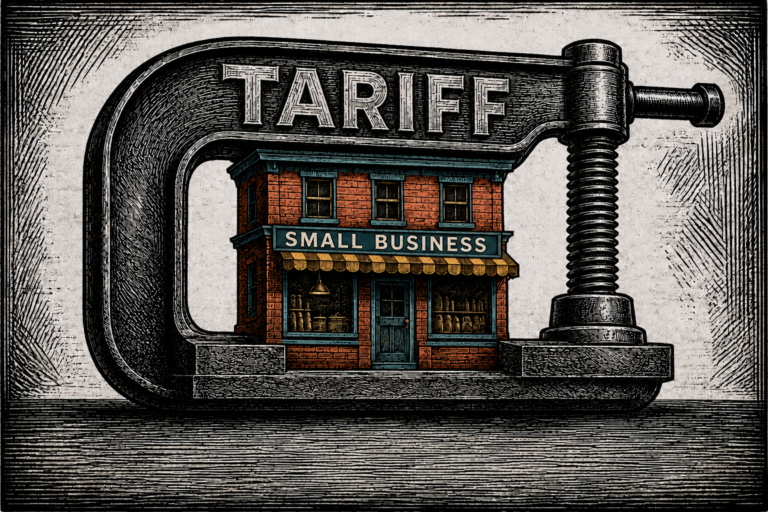
Ottawa has committed billions to help Canadian businesses navigate U.S. tariffs. In August, the federal government announced another $7.5 billion in new and enhanced measures for workers and businesses, including financing and liquidity support. Those commitments matter. But they tell us surprisingly little about whether the smallest businesses can get the help they need. Canada should judge tariff relief by the businesses it reaches and the pressures it addresses, not simply by the dollars Ottawa announces.
Small businesses are feeling the pressure, but not the relief
Merchant Growth’s 2026 Canadian Small Business Report, based on a September survey of small business owners, found that 65% had been affected by Canada-U.S. trade tensions. Yet 68% said federal and provincial tariff support had made no noticeable difference to their businesses.
That does not mean 68% applied for assistance and were rejected. The survey measured owners’ experience of government support, not program uptake. Still, the gap between the announcements and what owners are feeling deserves attention.
The costs are concrete. Among those surveyed, 38% reported higher costs for goods or supplies because of trade tensions, 27% reported lower revenue and 26% reported weaker customer demand. Another 37% said small business was not part of the trade-negotiation conversation at all.
A manufacturer exporting to the U.S. is an obvious candidate for relief. But a neighbourhood retailer absorbing higher inventory costs from Canadian counter-tariffs, or a restaurant whose customers are spending less, can feel the fallout too. These businesses may need far less financing than a manufacturer, but their cash-flow pressures can be just as urgent.
The rules shape who gets relief
The problem is not only the funding. It is the eligibility rules. Some major tariff-relief programs are designed around businesses operating at a scale that puts assistance beyond the reach of smaller firms.
Take the Canada Strong Diversification Fund. Its capital-maintenance stream requires at least $20 million in annual revenue and an average of $5 million a year in capital expenditures over the previous three fiscal years.
There are good reasons to support exporters, manufacturers and strategically important supply chains, and to protect existing production capacity. The smaller firms that supply and serve those industries depend on their survival. But a program designed around large capital investments will not help a smaller business trying to cover higher operating costs today.
The Regional Tariff Response Initiative leaves a different gap. In southern Ontario, applicants generally need at least $1 million in annual revenue and must be incorporated. Retailers, restaurants and other local consumer services are generally ineligible. FedDev Ontario does leave room to explore support for businesses below the revenue threshold that are important to local economies, sectors or supply chains. But that is different from a clear, broadly accessible route to assistance.
That puts the retailer and restaurant described above in a bind. A shop with less than $1 million in revenue can face higher inventory costs from trade disruptions, while a restaurant can face falling customer spending. Both may struggle to find support for those pressures. Supporting major industries should not mean overlooking businesses closer to the end consumer.
A more inclusive response would recognize that financing needs vary widely. Some firms need millions to retool a production line. Others need a smaller amount to cover inventory, payroll or a temporary drop in sales. Government programs should accommodate both.
Emergency support should not be the whole strategy
The programs are also time-limited. Southern Ontario’s regional tariff initiative offers liquidity assistance for up to 12 months, ending no later than March 31, 2028. Supported pivot projects must be completed by March 31, 2029.
Those deadlines make sense for emergency programs. But Canada’s trade challenges are unlikely to disappear when a funding window closes. Businesses making decisions about suppliers, equipment and expansion need more certainty.
Ottawa’s proposed Productivity Mega Deduction takes a different approach. It would make immediate tax deductions for a broader range of business investments permanent, helping companies plan future investments.
That helps, but an investment tax deduction cannot replace the cash a business needs to make those investments, pay a supplier or keep staff on the schedule. Longer-term tax incentives and accessible working capital do different jobs. Canada needs both.
There is already a foundation to build on. The Canada Small Business Financing Program shares loan risk with participating financial institutions. A federal review estimated that more than three-quarters of financing requests from businesses receiving loans under the program would otherwise have been denied. That is evidence that government-backed financing can extend access where conventional credit falls short.
The next step should be to give small businesses more choice. Ottawa should work with qualified digital and alternative lenders to participate in government-backed financing alongside traditional institutions. These lenders can use cash-flow data and other business information to assess risk, with processes designed to handle the smaller financing amounts many operators need. Digital delivery can also make applying more convenient for owners with little time to spare.
Participation should come with rigorous underwriting, transparent borrowing costs and appropriate safeguards. The goal is better access to responsible financing. More debt, on its own, is not a measure of success.
Ottawa should also publish practical measures of delivery: how long applications take, how much funding reaches businesses, how many recipients have annual revenue below $1 million and which sectors remain underserved. Announcements alone cannot answer those questions.
The test is whether businesses can use it
Government support is necessary, but temporary relief cannot resolve the financing challenges small businesses face. If Canada wants stronger domestic supply chains and less exposure to future trade shocks, small businesses need reliable access to financing beyond the next emergency announcement.
Ottawa can support major industries while ensuring smaller businesses have a workable route to assistance. The test of tariff relief is how many businesses can access it and put it to work.
Five key points
- Merchant Growth’s survey found that 65% of small business owners had been affected by trade tensions, while 68% reported no noticeable impact from government tariff support. The latter measures perceived impact, not application outcomes.
- Revenue thresholds and sector restrictions leave gaps for smaller operators seeking tariff relief.
- Trade tensions affect businesses beyond exporters and manufacturers, including retailers, restaurants and other local operators.
- Temporary relief and investment tax incentives should be complemented by reliable access to working capital.
- Qualified digital and alternative lenders could broaden financing choice, supported by rigorous standards and public reporting on who receives assistance.