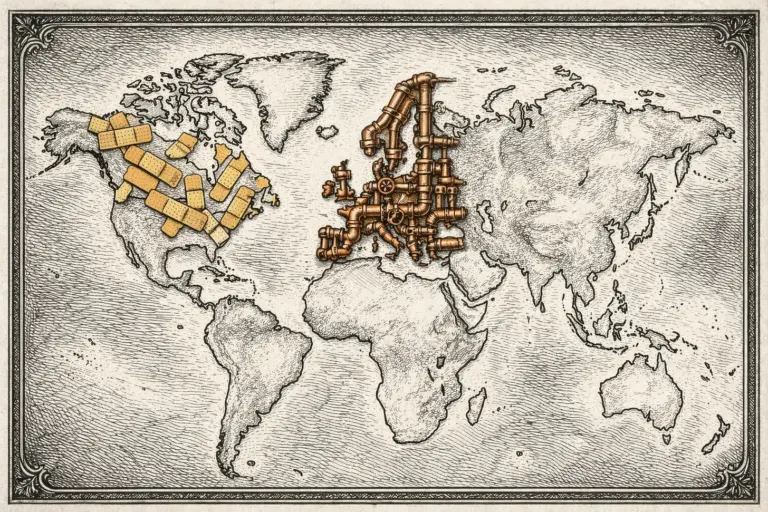

Canada Needs More Banking?
June 29, 2026
Gary Schwartz Canadian Lenders Association

How Greater Competition and New Market Entrants Can Drive Innovation and Expand Choice in Canadian Banking
Abstract: Canada’s banking system has earned its reputation for stability, strong supervision and resilience, but that same cautious model has also limited competition and made it difficult for credible new entrants to move into the regulated banking system. OSFI’s streamlined approvals framework is important because it offers a clearer path for qualified credit unions, fintechs and emerging financial institutions to seek federal status without weakening prudential standards. The Canadian Lenders Association ecosystem already shows that innovation is happening across credit, payments, identity, fraud prevention, open banking and embedded finance, but too often that innovation develops around the banking system rather than inside it. Canada can learn from the UK, Singapore, Lithuania and Australia: new entry should be encouraged, but only with strong capital, governance, compliance, operational resilience and supervision. The goal is not to abandon conservative banking, but to modernize it so that competition, innovation and depositor protection can advance together.
Canada’s banking reputation precedes it globally. A system built around a small number of large institutions and stability.
That model has served the country well. Canadian banks have been well-capitalized, well-regulated and the result has been financial resilience. In a country with regional economic differences and recurring exposure to commodity cycles, that stability has mattered.

But rules designed to protect depositors and preserve confidence can also make it difficult for new entrants to compete. Over time, a cautious system can become a system with too few options for consumers, small businesses and communities.
That is why OSFI’s streamlined approvals framework for targeted new entrants is important.
https://www.osfi-bsif.gc.ca/en/data-forms/applications-approvals/streamlined-approvals-framework-targeted-new-entrants/screening-criteria
The framework applies to provincial credit unions seeking to become federal credit unions, and to innovative or emerging banking models seeking federal bank, trust or loan company status. In simple terms, OSFI is setting out what applicants must show, how they will be assessed and what safeguards may apply.
Canada has tried to open the federal path before. OSFI has long had incorporation and continuance guides, and the federal credit-union framework was meant to give provincial credit unions a route to national scale. But those pathways were often clearer on paper than in practice: slow, costly, uncertain and built around the expectations of mature institutions.
The difference now is that OSFI is explicitly committing to a quicker, clearer and more risk-based process for targeted new entrants.
For many would-be entrants, that clarity matters. The federal path into banking has often been viewed as expensive and uncertain. A fintech, credit union or emerging financial company could look at the requirements and conclude that becoming a regulated financial institution was possible in theory, but difficult to justify in practice.
Across the Canadian Lenders Association ecosystem, we see the same pattern from different parts of the market. Banks, fintechs, credit unions, non-bank lenders, data providers, payment companies and risk-technology firms are all trying to modernize credit and financial services. They are working on better digital onboarding, fraud prevention, identity verification, open banking, real-time payments, small-business lending, automotive finance, mortgage innovation and new-to-Canada financial access.
Many at the CLA will tell you that when the path to becoming a regulated institution is too unclear, many firms do not stop innovating. They adapt. They build through bank partnerships, agency arrangements, embedded-finance models or other structures that sit beside the core banking system rather than inside it. Those models can be useful, and in many cases necessary. But they are not a substitute for a clear, credible route into federal regulation for companies that are ready to meet the standard.
When the official path is too unclear, innovation does not stop. It tends to develop through partnerships, agency models and other structures outside the core banking framework. That may be commercially understandable, but it is not always the best outcome for competition, supervision or consumers.
A modern financial system should make room for credible innovators inside the regulated perimeter, subject to capital requirements, governance standards, financial-crime controls, operational resilience expectations and ongoing supervision.
The CLA community already has the ingredients for more competition: strong credit unions, specialized lenders, fintech platforms, data and identity providers, payment innovators and experienced compliance firms. What it has lacked is not entrepreneurial energy. It has lacked enough clear pathways for serious firms to move from the edges of the system toward the regulated centre.
Look globally … Canada is not alone in facing this issue. Other financial centres have already recognized that the answer is not to choose between stability and competition, but to design entry pathways that preserve both.
🌏 United Kingdom offers a useful model. It created a pathway for new banks that includes a “mobilisation” stage. This allows a bank to be authorized with restrictions while it finishes building its people, systems, governance and operations. During that period, deposits are tightly limited and the institution must meet further requirements before operating as a full bank. The principle is clear: let credible entrants move forward, but contain the risk until they are ready.
Britain’s challenger banks show why this matters. Monzo, Starling and Atom did not replace the largest banks. But they changed customer expectations around onboarding, mobile banking, real-time notifications, budgeting tools and account management. They pushed the wider market to improve.
🌏 Singapore offers another important example. It is a conservative financial centre, not a regulatory free-for-all. Yet it created digital bank licences for firms such as GXS Bank, backed by Grab and Singtel, and MariBank, backed by Sea. These firms were not admitted simply because they were innovative. They were brought into a licensing framework with clear supervisory expectations and progressive development under MAS oversight.
🌏 Lithuania provides both a lesson and a warning. It built a fintech-friendly licensing environment and attracted global firms such as Revolut, helping the country become more relevant in European digital finance. But Revolut’s later AML/CFT control issues show that licensing is only the starting point. New institutions need continuing supervision, strong compliance systems and clear accountability.
🌏 Australia’s neobank experience is another cautionary case. Some digital banks struggled, pivoted, were acquired or exited the market. That does not mean entry should be blocked. It means entry should be matched with capital, governance, operational readiness and credible wind-down plans.
This is the balance Canada should seek: more entry (but not unsupervised entry) = more competition.
Canada’s financial system is changing. Open banking, real-time payments, embedded finance, artificial intelligence, digital identity and new credit models are reshaping how financial services are delivered. At the same time, affordability pressures have made competition more important. Banking competition affects account fees, mortgage switching, small-business credit, payment costs, fraud prevention and access to capital.
OSFI’s framework will not solve all of this on its own. But it is a useful step.
The treatment of federal credit union continuance is especially important. Credit unions are not simply smaller banks. They are member-owned institutions with local relationships and a different role in many communities. Giving qualified provincial credit unions a clearer route to federal status could expand competition while preserving a strong prudential framework.
The treatment of innovators also matters. Innovation should not mean a polished app wrapped around the same old economics. It should mean better service, better access, better pricing, stronger risk controls and products that solve real customer problems.
The real test will be execution. A streamlined process must actually be streamlined. Timelines must matter. The applicant dashboard must create genuine transparency. Risk-based review must not become the old process under a new name. Conditions and restrictions should allow controlled entry, not quietly defeat it.
Applicants also have responsibilities. This is not a shortcut for weak governance or thin capital. Fintechs that want federal status must be prepared to operate like financial institutions, not simply technology companies with financial products. Credit unions seeking national scale must show that their systems, capital and management are ready.
Canada does not need to abandon conservative banking. It needs to modernize it.
The goal should be a financial system where credible new entrants can compete, depositors remain protected and regulation supports responsible growth. OSFI’s new framework is a step toward that balance. It does not force Canada to choose between innovation and safety. It shows that, with the right guardrails, the country can have both.
Five Key Points
- Canada’s banking strength can also become a constraint.
Stability has served the country well, but a system dominated by a small number of large institutions can limit choice for consumers, small businesses and communities. - OSFI’s framework creates a clearer route into federal regulation.
The framework matters because it gives qualified new entrants, including provincial credit unions and emerging banking models, a more transparent path to federal status. - Innovation is already happening, but often outside the core banking system.
CLA members are modernizing lending, payments, fraud prevention, identity, open banking and credit access, but unclear entry pathways often push firms into partnerships, agency models and embedded-finance structures instead of full regulation. - Global examples show that competition and safety can coexist.
The UK, Singapore, Lithuania and Australia demonstrate that new banking entrants can improve customer expectations and market dynamism, but they also require strong supervision, compliance and credible wind-down planning. - The real test will be execution.
A streamlined process must actually reduce uncertainty, improve transparency and support controlled entry. New applicants must also be ready to meet serious expectations around capital, governance, risk controls and operational resilience.