

 Event Insights
Deal Makers
June 17, 2026

Beyond the Deal: How Strategic Fit, Capital and Trust Are Shaping Successful Financial Services M&A
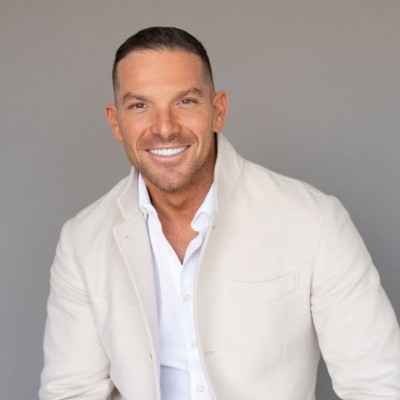
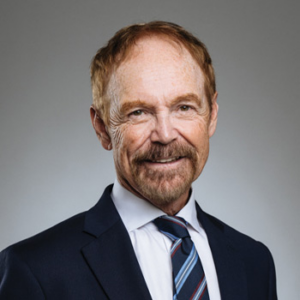
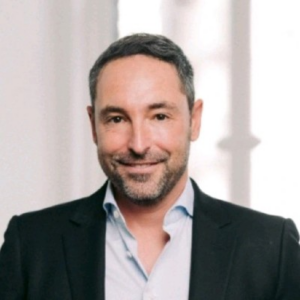
Abstract: In this panel on M&A, capital markets, cross-border growth, and strategic transactions, Cihan Tuncay (Managing Director, Galata Advisors) moderated a discussion with Lawrence Krimker (CEO, ECN Capital), David Taylor (Founder & President, VersaBank), and Sheldon Saidakovsky (Founder & CFO, Propel Holdings) on what it takes to buy, sell, finance, and scale financial services businesses in Canada and abroad. The panel explored how sellers can maximize value by understanding buyer synergies, how buyers evaluate acquisition targets across financial, market, and cultural dimensions, and how regulatory strategy, public markets, banking relationships, and trust all shape successful transactions. Across dealmaker, bank, fintech, and capital markets perspectives, the message was clear: getting a deal done requires more than price—it requires strategic fit, regulatory readiness, credible growth capital, and a clear understanding of how value will be created after close.
Cihan Tuncay: We have a great panel of industry leaders here in the Canadian market and the U.S. market as well, so thanks everyone for joining us.
I run Galata Advisors. My background includes sell-side advisory, investor experience, corporate executive experience, IPOs, sale of companies, and capital markets advisory. We work with companies looking to raise money, investor relations advisory, and anything needed to help meet strategic growth objectives.
Over the years, I have had the chance to work with each of the esteemed companies on the panel here today. We have Lawrence Krimker, CEO of ECN Capital, a company that was public and was recently taken private. We have Sheldon Saidakovsky, CFO and co-founder of Propel Holdings, one of the great fintech lending and consumer fintech lending stories over the last couple of years. And we have David Taylor, founder and president of VersaBank, the original fintech bank before that was even a term, which revolutionized the industry with electronic deposit distribution systems decades ago.
Today, we are going to go through a few topics: strategic transactions, M&A from both the buy-side and sell-side perspectives, funding growth objectives, attracting capital, domestic versus international investor interest, and U.S. opportunities.
Cihan Tuncay: Let’s start on the M&A side from the seller perspective. Lawrence, you recently bought ECN Capital and have great experience selling businesses as well.
For people thinking about what their exit could look like and how they realize their liquidity goals, what are the three key points you would advise someone looking to sell their business, execute effectively, and get a transaction over the line?
Lawrence Krimker: From my experience, when we were initially looking to sell a business, we would start with trying to maximize purchase price. That is probably common practice.
Going through that experience, I realized that maximizing purchase price starts with figuring out what your company is actually worth. That may sound counterintuitive, because you might think you should already know what it is worth, but every business is different and the metrics that matter are different.
When I think about what a company is worth, I think about what metrics matter, what the standard multiple is against that metric in that industry, and then you can understand within a tight band what your company is worth.
But purchase price is more than just what your company is worth. It is what your company is worth plus the additional premium on top of that. That is the holy grail when you are trying to maximize purchase price.
One thing that has worked well for me is looking at my business from the lens of the purchaser and trying to understand the light switch synergies they can create on day one.
There are synergies that happen over time, such as upgrading technology platforms or reducing operating expenses, but I do not think the seller should be paid for all of that because the buyer has to do that work.
What I am talking about are light switch things.
For example, in 2019 we were selling a business with a couple hundred million in assets. We realized early on that the purchaser had a significantly lower cost of capital. If they refinanced our portfolio with their cost of capital, it would free up tens of millions of dollars that they could use for my premium.
We used that as negotiating leverage. We negotiated to the maximum amount of the multiple range and then illustrated for them that if they refinanced our portfolio with their lower cost of capital, they would free up additional cash. When it came time for the final negotiation, we were able to extract a much larger premium.
The short answer is: look at your business from the lens of the purchaser to identify light switch synergies that create immediate value in their hands, and then use that to support your purchase price premium. It all starts with understanding your true value and then trying to get premium on top.
Cihan Tuncay: That is an incredibly important point. The numbers have to work, but in my experience, being able to sell the buyer on how they are going to make money from the deal is critical.
The buyer has to go raise financing to buy your company, so they need to sell the concept to their investors: why it is undervalued and how everyone is going to make money from doing the deal. That is much more effective than simply saying, “I want this premium,” without justifying how the buyer will make a strong return.
Lawrence Krimker: Exactly. Negotiating leverage is created by understanding those light switch synergies and how much more valuable your business is in their hands on day one.
Cihan Tuncay: Let’s move to the buyer perspective. Sheldon, Propel made a sizable acquisition in QuidMarket, a UK company, about a year and a half ago. It was not just a financial transaction, but also international expansion.
How do you look at acquisitions from the buy-side perspective? You see lots of opportunities on a daily basis. What differentiates the one you picked, and what would you be looking for going forward?
Sheldon Saidakovsky: Since we have been public, we have probably looked at about 40 or 50 transactions, and QuidMarket, which is a UK company, was our first acquisition since we started the company in 2011.
It has been an incredible success, and we could not be happier.
The way we evaluate companies is based on three criteria, and a business needs to check every single box.
First is financial accretion. Second, the market needs to be something we like and where we can envision a lot of potential. Third, and most complex, is culture. We need to make sure the business is well run and can integrate with us very well.
From a financial accretion perspective, that is the easiest one to analyze as finance people. We need to make sure the company is profitable, has good growth prospects, and is growing at a nice clip. We also need to envision the synergies and additional value we can unlock when we work together.
From a market perspective, there has to be a big TAM. We need to assess the competitive dynamics in that market and understand the regulatory environment. Regulation needs to enable companies to service the large demand in that market.
From a cultural perspective, that is the hardest one. We are a founder-led company. We started the company in 2011. All the founders are still together. The tenure of our executive team is in excess of eight years, and we have built something really special. We are not going to let anything disrupt that.
A lot of companies failed from that perspective. QuidMarket, now Propel UK, looked very much like we did about five or six years ago. We could map out the growth opportunity in that market and with that team if we applied our expertise and balance sheet.
Cihan Tuncay: David, from your perspective, it has been almost two years since VersaBank went into the U.S. and bought a Minnesota-based bank. You essentially bought a dormant banking licence to springboard into a growth platform there. What was your experience with that acquisition and expansion?
David Taylor: Looking back in history, I did the same thing around 1993 when I came up with what was considered a crazy idea at the time: to be the first branchless digital bank.
I did what a young MBA student probably would do. I prepared a business plan and brought it to the regulators. They thought I had two heads and kicked me out the door. Branchless digital bank? Banks have pillars. What are you doing?
So I looked for the smallest financial institution in existence at the time, which was Pacific and Western Trust in Saskatoon, Saskatchewan. I acquired it so that I had a lending institution platform where I could demonstrate to regulators how a branchless digital bank would work.
On August 1, 2002, I was blessed with the first Schedule I bank licence in about 18 years. So that worked.
When I put my banker eyes south of the border to see what I could do there, I thought, it worked once, maybe it will work again. I found what I think was the smallest financial institution in existence, in a village in Minnesota called Holdingford, that had an OCC national bank licence.
When I went to do due diligence, I saw a coyote in the foyer with a rabbit in its mouth. Literally. But I thought, it has a licence. Hopefully the licence is not in the coyote’s mouth.
The takeaway is that if you are focused on the licence, do not get distracted by anything else. Investment bankers were showing me all kinds of banks in the United States with huge branch networks and everything else. But I do not like branch networks.
We acquired it, and it did exactly what we wanted. A short year or so later, the U.S. is producing about 21% of our revenues, which is fantastic from a banker’s perspective.
Cihan Tuncay: Let’s talk briefly about a less exciting but very important part of each deal: navigating the regulatory scheme, whether cross-border or domestic, to get the deal approved and manage regulatory requirements. You are all in highly regulated businesses. How do you manage that with respect to transactions?
Lawrence Krimker: This is a short answer: we spend a lot of money on really good counsel.
Across multiple platforms that we own, including ECN being the most recent, we are in heavily regulated markets in the U.S. and in extremely niche asset classes. That requires a high degree of subject matter expertise.
We have our own in-house legal team, but we very much rely on subject matter experts and specific lawyers to make sure we navigate the regulatory framework properly.
Cihan Tuncay: Sheldon, was there anything from the UK acquisition that stands out from a regulatory standpoint?
Sheldon Saidakovsky: We provide credit to non-prime consumers, and it is a highly regulated industry. But we are used to operating in that type of market in the U.S., where there is regulation at both the state and federal level. About 90% of our business is in the U.S., so we are used to that.
We have local counsel in every state, in-house counsel, and in-house compliance. One thing we do not take any risk on is compliance. That is paramount to being able to operate and create long-term value and growth.
We approached the UK the same way. One of the reasons we liked QuidMarket was that they had that same mindset.
What is interesting in the UK is that the regulatory environment is actually quite friendly to industry. They went through regulatory changes years ago that led to a lot of supply exiting the market. The regulator realized they had overcorrected, as happens many times, and began inviting strong, solid, compliant operators back into the market.
That created a big opportunity because in the UK there is a vast undersupply of credit against a demand and TAM that is growing significantly.
Cihan Tuncay: David, VersaBank is publicly traded on both the TSX and NASDAQ. How has the capital-raising process gone for you as a public company, not just on the deposit side, but from a public company perspective? How has your U.S. listing experience compared with being listed in Toronto?
David Taylor: We are listed on the TSX in Toronto and on NASDAQ, so I have a unique perspective on securities regulation and bank regulation at the same time.
I found the United States to be very welcoming and receptive to our business model. In Canada, I would hear, “Why aren’t the big banks doing it? If it was really important, the big banks would have done it.”
In the United States, the reaction is different: “You have a new model? How does that work? That is fantastic.”
There are reasons why the receptivity for a tech company in the United States is higher than it is in Canada. On the banking front, the U.S. has thousands of community banks, and their members all vote. In Canada, the banking market is dominated by a small number of large banks, so there is not the same voting power.
In the United States, if you bring a new idea that helps consumers or small businesses, the response is much more open. In Canada, they can look at you more suspiciously.
It has worked well for us. If anyone wants to talk offline about the details of that difference, I am happy to do that.
Cihan Tuncay: David, you have had some key announcements recently, including real-time funding and tokenized deposits. Can you talk about those innovations?
David Taylor: We formed the first digital vault around 2018 to take advantage of blockchain technology, and we pioneered a tokenized deposit in Canada shortly after that.
At that time, the Canadian environment was more conducive. In the United States, Sam Bankman-Fried and others were getting attention, so the U.S. was less receptive to tokenized deposits. Now, of course, tokenized deposits and stablecoins are the new best thing in the United States, while Canada seems more reluctant.
We are also the first custodian of the first Canadian stablecoin, QCAD.
With respect to the real-time purchase of receivables, that is a breakthrough in the world of finance for small business and consumers. Normally, a point-of-sale finance company of any size moves to the securitization market, batches up receivables, tiers them, and sells them into the marketplace. That has been the mainstay for that industry for decades.
Most recently, we announced something I think is revolutionary: we developed technology, with the use of AI, where we can buy receivables as they are generated in real time onto our balance sheet and leave our partners to focus on what they do best, which is credit adjudication and dealing with the marketplace.
We launched that on both sides of the border. It has been extremely well received in Canada and the United States.
Lawrence Krimker: We are a recipient of David and VersaBank’s innovation, not just with this product, but over close to 15 years.
The importance of having a financial institution or backer that will support you as an entrepreneur cannot be overstated. In my career, it has been one of the foundations for our success, regardless of which business we were operating at the time.
We have been through half a dozen companies over that period, including manufactured housing and RV finance, home improvement loans, and other businesses. Having a financial institution that genuinely understands what you are doing and where you develop a real relationship has been the cornerstone of how we have been able to grow.
That relationship is built on trust and transparency, and that takes time. As an entrepreneur, things are never going to go exactly according to your business plan. We have always had open, honest communication with VersaBank. If something does not go according to plan, we are transparent. We explain what is happening, provide data to support it, and explain the remedies we are going to take.
We work together as partners. As VersaBank has innovated and grown with new products, we have also grown with them.
David Taylor: If you have not read it, there is a book by Stephen Covey called The Speed of Trust, and it says exactly what Lawrence is saying. I built a business on trust.
I learned a lesson in trust when I was working as a prison guard in a maximum security prison. I came across a despondent criminal who had lit himself on fire. I got him out, covered him in wet towels, and saved his life.
Later, another inmate came to me and said, “You looked after my brother. Thanks for that.”
Later, the prison was overtaken by inmates. They captured the guards, and that same trust mattered. Trust is a very important and valuable gift or tool to have.
When I became a banker, I carried that with me.
Cihan Tuncay: Sheldon, many people here are looking for financing. From a CFO perspective, what has your experience been funding growth? How is the environment for access to equity and other forms of capital?
Sheldon Saidakovsky: From our perspective, being public has absolutely helped us execute on the QuidMarket transaction and access capital.
It gives us flexibility, optionality, and credibility when we approach and evaluate potential targets. Through the QuidMarket transaction, we were able to raise $115 million within 24 to 48 hours through a bought deal that was two times oversubscribed.
So we are certainly open for business.
But I would be remiss if I did not mention some of the frustration of being a financial technology company that is public in Canada. We feel we are vastly undervalued and that our stock price does not reflect our profitability and growth.
There is a small and relatively concentrated investor base here in Canada. We have heard recently that some small cap funds have closed, and that funds in Canada are investing in resources like gold and mining, and select technologies like AI and space.
That creates a scenario where we feel undervalued. Our business has grown at a CAGR of 43% in revenue since 2019, and earnings have grown by 64% over that same period. We have put out record after record. Recently, we had record revenues in Q1, grew earnings, paid an increasing dividend, and paid down debt all at the same time.
We are also launching initiatives globally and throughout the United States to grow.
What we can continue to do is drive earnings up. Hopefully, over time, the stock price will come up and give us more ability to acquire more companies.
Cihan Tuncay: Being public is one thing, and being master of your own domain from a personal liquidity standpoint, without a large sponsor determining your liquidity outcomes, can potentially be an advantage in a bull market.
We are coming up on time, so thank you so much for joining us. If anyone wants to talk about capital markets goals, feel free to reach out. Thank you to the panel.
Here are 10 key insights from the panel:
1. Sellers need to understand their true value before negotiating premium
Krimker emphasized that purchase price starts with knowing which metrics matter, what the relevant industry multiples are, and what the business is worth before seeking additional premium.
2. “Light switch synergies” can create powerful negotiating leverage
Immediate, day-one value that a buyer can unlock—such as lower cost of capital—can support a higher premium if the seller clearly demonstrates it.
3. Buyers evaluate more than financial accretion
Saidakovsky explained that Propel looks at three criteria in every acquisition: financial accretion, market opportunity, and cultural fit.
4. Cultural fit can be the hardest acquisition test
For founder-led companies, integration risk is not just operational. A target must fit the culture and leadership model that made the buyer successful.
5. Buying a licence can be a strategic growth shortcut
Taylor described how VersaBank used acquisitions of small licensed institutions in both Canada and the U.S. to create platforms for regulatory approval and growth.
6. Regulatory readiness is central to deal execution
Panelists agreed that highly regulated transactions require strong counsel, subject matter expertise, compliance infrastructure, and comfort operating across jurisdictions.
7. International expansion depends on regulatory fit and market opportunity
Propel’s UK acquisition worked because the market had strong demand, a supportive regulatory environment, and an undersupply of compliant credit providers.
8. U.S. markets can be more receptive to new financial services models
Taylor contrasted Canadian skepticism toward new banking models with stronger U.S. receptivity to innovation that helps consumers and small businesses.
9. Innovation in funding can reshape lending business models
VersaBank’s real-time receivables purchase model uses AI to buy receivables as they are generated, allowing partners to focus on credit adjudication and customer acquisition.
10. Trust and transparency are foundational to long-term capital relationships
The panel emphasized that entrepreneurs need financial partners who understand their business, and that open communication during challenges builds the trust needed to scale.
“`