
 AML & Finance



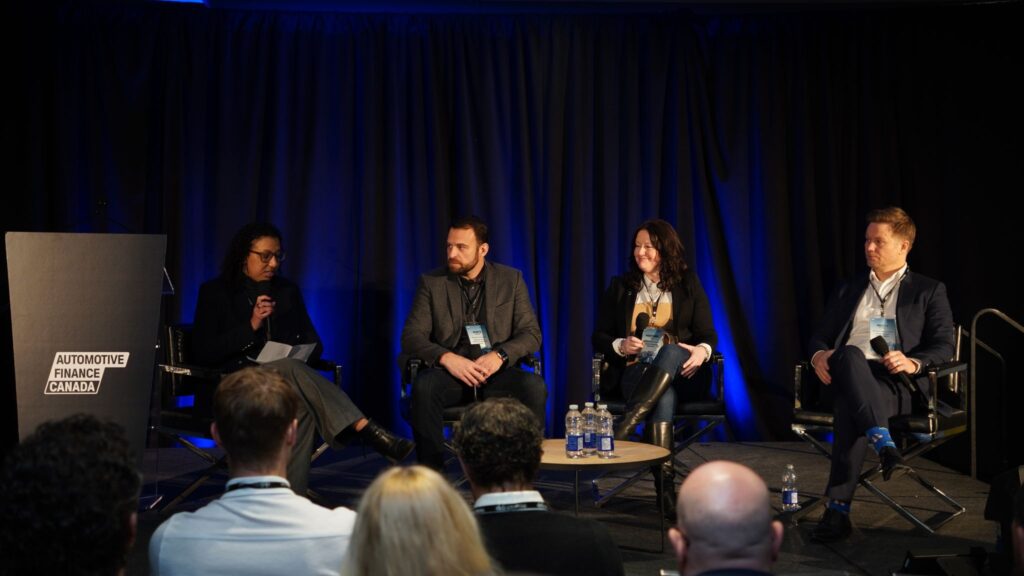

 Check out the full VIDEO here.
Danielle Butler: When we were preparing for this panel, we discussed the impact of data and telematics on fleet financing. Heather, can you walk us through what data is changing decisions—and what’s just noise?
Heather Heggie: The shift isn’t just the volume of data—it’s the context. Telematics lets us build business cases using real, operational performance, not just marketing claims. We can look ahead using predictive analytics and layer telematics insights into customer profiles to forecast outcomes—like fuel consumption and the benefits of newer equipment. That helps us structure solutions that support customers through tough periods while still protecting the portfolio.
Danielle Butler: Heath, same question—when you’re talking about light vehicles, do you see data and technology being used differently?
Heath Valkenburg: Financing matters, but in the true cost of running a fleet, it’s often not the biggest driver. Downtime, maintenance, depreciation, and fuel dominate. A lot of the value we deliver comes through services—route optimization, EV simulations, predictive maintenance, and strategic advisory—most of which is increasingly data- and tech-enabled. Financing can be commoditized; the differentiator is services powered by data.
Danielle Butler: Goetz, what’s not going to change? What can data not replace in fleet lending?
Goetz Johanning: Data and AI will trigger better decisions and reduce time spent on mundane tasks, but they don’t replace the human call. Trucking is deeply relationship-driven. You still need judgment to recognize inconsistencies, gut-check what doesn’t reconcile, and sit down with customers—especially in stressed situations. Restructuring is often about understanding what’s really happening and building a plan together. Automation won’t do that conversation.
Danielle Butler: Heather, we’re in a volatile cycle. What do lenders often misread about small and mid-sized fleet operators right now—and how should that change credit decisions?
Heather Heggie: Lenders can over-weight what happened in the past and under-weight what’s likely to happen next. In trucking, tough cycles can present opportunity: this is when financial partners should lean in, structure and restructure intelligently, and keep good operators moving. If you help customers through hard times, loyalty lasts. It’s about mindset, calculated risk, and being prepared to manage assets responsibly if things don’t go as planned.
Danielle Butler: Heath, are you also seeing the need for adaptability as markets shift?
Heath Valkenburg: Yes, though our model is different. We don’t take residual value risk, and we manage an investment-grade book with very low loss rates. That structure allows us to take a long-term view and work with clients through difficult moments—restructuring when needed—because preserving the relationship and keeping fleets operating is often the best outcome for both sides.
Danielle Butler: Goetz, looking ahead to 2026—how do you see cost of credit and lender risk decisions playing out?
Goetz Johanning: I don’t see a broad cap on credit—more that capital will flow toward customers where the picture is coherent and transparent. Captives exist to support sales of trucks, so we remain active, but we’ll decide how and how fast we grow with a customer based on the data and the relationship. The fundamentals still matter: character, trust, and the human assessment alongside the analytics.
Danielle Butler: Heath, what are your primary drivers as you look toward 2026?
Heath Valkenburg: It depends on the segment. For small and mid-market fleets, financing, speed, and simplicity matter a lot—digitization is key to scaling. For large investment-grade clients, they may self-fund vehicles and partner with us for service optimization. Across the board, technology and data remain central—but the key is continuing to innovate so fleets can operate more efficiently, whatever the economy does next.
Danielle Butler: Heather, final thoughts—what are you most focused on heading into 2026?
Heather Heggie: When volumes slow, it’s the best time to innovate. This is when we improve processes and develop new offerings—insurance, waivers, and usage-based concepts like pay-as-you-go—enabled by technology already embedded in trucks and equipment. The market is cyclical. It will change. The priority is using the lull to get ready for the upswing while continuing to support customers through uncertainty.
Here are 10 key insights from the panel:
-
Fleet finance is evolving beyond underwriting
Modern fleet finance blends risk judgment, data interpretation, and relationship management—not just price and collateral. -
Telematics matters when it’s contextualized
Raw data alone can be noise. The advantage comes when telematics is layered into customer profiles to inform predictive, forward-looking decisions. -
Predictive analytics shifts the credit mindset from “rearview” to “windshield”
Panelists emphasized the need to reduce reliance on backward-looking performance and build structures based on what’s likely to happen next. -
Services are becoming the differentiator
For many fleets—especially light commercial—value is increasingly delivered through tech-enabled services that reduce downtime and total operating cost. -
Financing is often not the biggest cost driver
Downtime, maintenance, depreciation, and fuel can outweigh financing costs in real fleet economics—changing what “good” looks like in decision-making. -
Relationships still decide outcomes in stressed situations
When customers are struggling, human conversations, trust, and restructuring plans often matter more than any dashboard or model. -
AI won’t replace judgment—it will raise the baseline expectation
AI is framed as an efficiency tool (like Excel once was), but not a substitute for intuition, exception handling, and credibility assessments. -
Volatile cycles create opportunity for well-structured support
Helping capable operators through tough periods can create long-term loyalty and stronger portfolios—if risk is taken deliberately and managed well. -
Business models shape the risk response
Different players manage risk differently (residual value exposure, investment-grade profiles, captive constraints), which influences how flexible they can be in downturns. -
Slow periods are the best time to innovate
Lower volumes can create space for new products and process improvements—especially offerings enabled by embedded vehicle technology and usage-based insights.
Sign up for the CLA Finance Summit Series