

The Tariff Is Becoming a Credit Event
August 22, 2026
Gary Schwartz Canadian Lenders Association

How Rising Tariffs Are Reshaping Auto Finance, Consumer Affordability and Access to Credit in Canada
Abstract: Most Canadians do not experience the price of a vehicle as a cash purchase. They experience it as a monthly payment. As the latest breakdown in Canada-U.S. trade negotiations puts automotive tariffs back at the centre of the economic debate, most attention is focused on manufacturing, supply chains and jobs. But tariffs also travel through the financial system. As vehicle costs rise, so can the amount financed and the monthly payment, eventually affecting the credit decision itself. With the Canadian Lenders Association and the American Financial Services Association working more closely on automotive finance across the border, there is an important question for lenders and policymakers on both sides: when does a tariff become a credit event?
Earlier this year, the Canadian Lenders Association and the American Financial Services Association launched a cross-border partnership around automotive finance. The premise was fairly simple. Canada and the United States have one of the most integrated automotive markets in the world, yet many of the issues facing the finance industry, from fraud and technology to regulation and access to credit, are still addressed largely within national borders.
The latest tariff fight makes that partnership even more relevant.
Most of the discussion about automotive tariffs has understandably focused on assembly plants, supply chains, investment and jobs. Working more closely with our colleagues at AFSA, however, has reinforced something that gets much less attention: there is an enormous financial ecosystem sitting downstream from the assembly line.
AFSA recently cited Oxford Economics research estimating that vehicle finance directly contributes $126 billion to U.S. GDP and supports approximately 680,000 jobs. The economic activity enabled by vehicle financing contributes another $532 billion and supports 3.6 million jobs.
Vehicle finance is not simply a payment mechanism. It is part of the economic infrastructure of the automotive industry.
And that is why I think we need to look at the tariff debate differently.
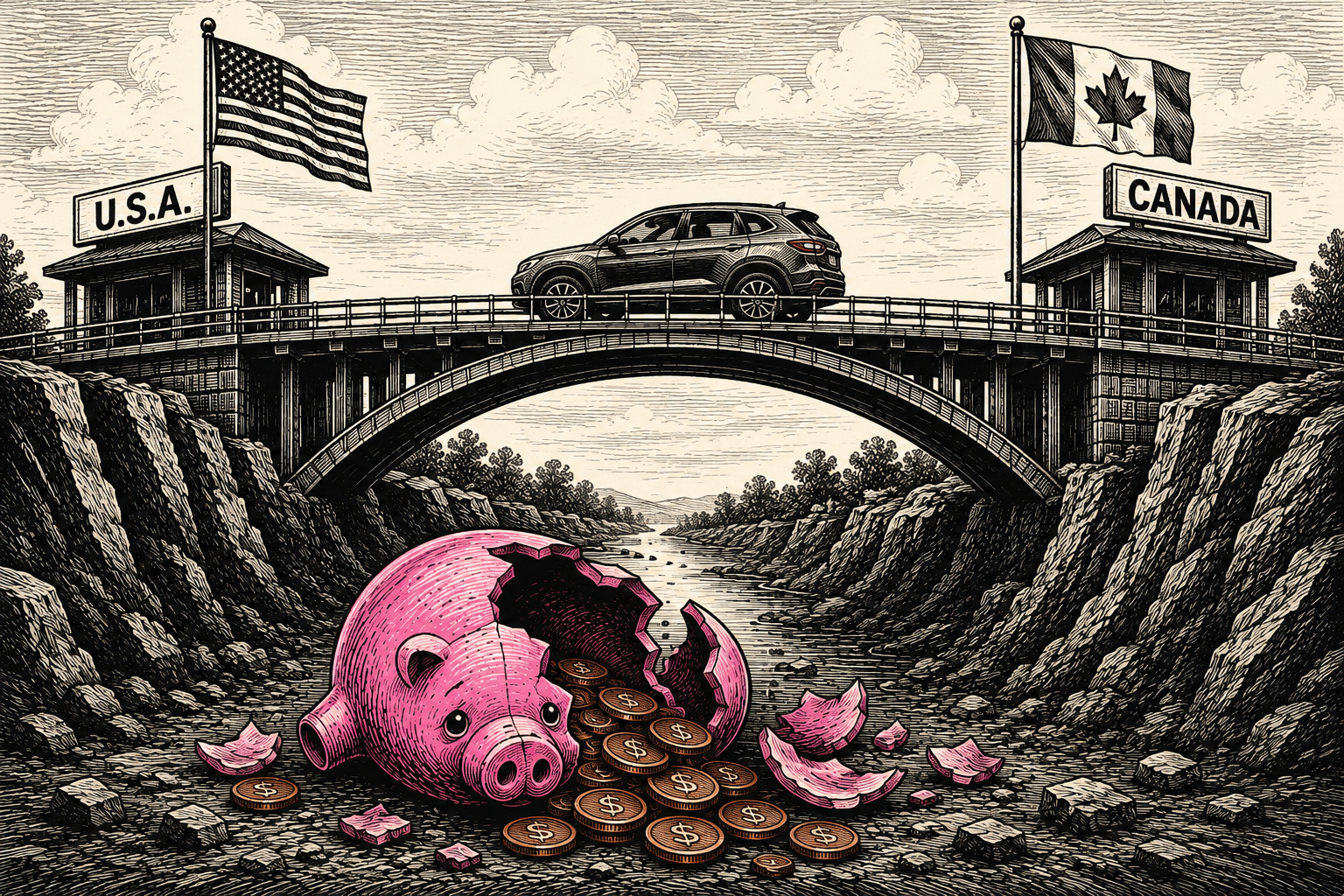
The tariff is becoming a credit event.
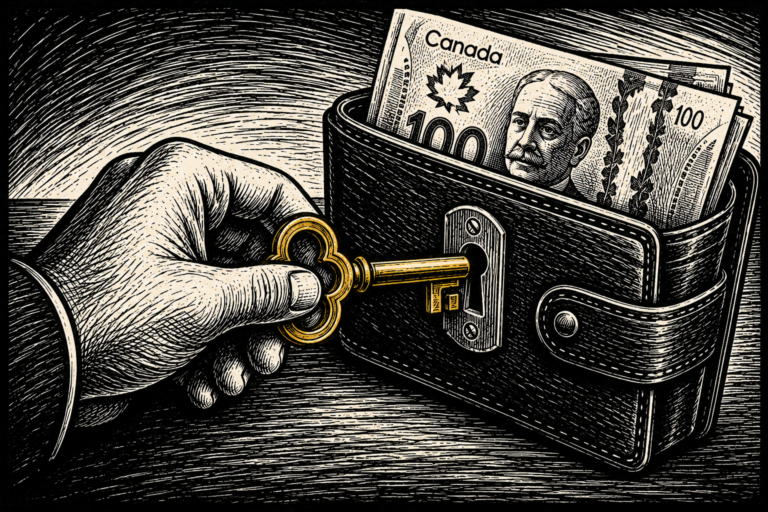
Most Canadians do not experience the price of a vehicle as a cash purchase. They experience it as a monthly payment.
At the end of 2025, Canadians carried $166.8 billion in auto loan balances. According to TransUnion, the average balance on a newly originated auto loan had reached $39,701, while monthly payments were increasing 4.8% year over year, substantially faster than wages and inflation.
If tariffs increase the cost of vehicles or their components, that cost has to go somewhere. It may mean a larger down payment, a higher monthly payment, a longer term or a move into a less expensive or used vehicle.
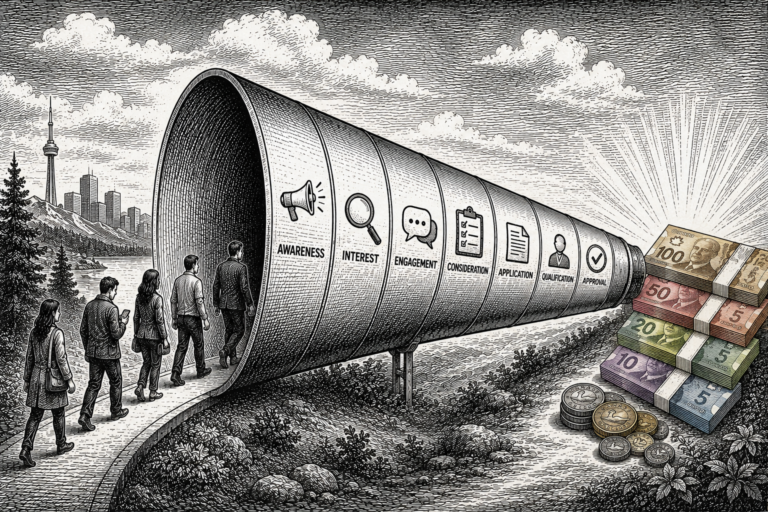
Eventually, however, affordability becomes underwriting.
A borrower who qualified for a vehicle at $40,000 may look very different to an underwriting model if the amount financed becomes $43,000 or $45,000. Debt service changes. Loan-to-value changes. The economics of the transaction change. At some point, the credit box changes.
We are already seeing signs of that pressure. AutoTrader’s 2026 data shows prime consumers continuing to purchase vehicles while subprime consumers have pulled back significantly. TransUnion reported serious Canadian auto delinquency at 0.96% in the first quarter of 2026, up from 0.91% two years earlier.
The U.S. is experiencing its own affordability pressures. AFSA has pointed to Federal Reserve data showing that 5.2% of auto loan balances were 90 days or more delinquent at the end of 2025, the highest share since 2010. AFSA rightly cautions against reading that statistic in isolation, but the larger issue on both sides of the border is difficult to miss. Affordability is increasingly shaping the automotive market.
Now add tariffs.
Bank of Canada research examining Canada’s 25% counter-tariffs found that prices of affected goods eventually increased approximately 6% relative to comparable untariffed products. Perhaps more importantly, businesses passed through more of the tariff when they believed it would persist.
That is what makes the breakdown in the latest negotiations important. Markets can absorb temporary shocks. Persistent uncertainty is harder to price.
For lenders, the implications extend beyond new originations. If consumers migrate from new vehicles into used vehicles, used prices and collateral values can move. Longer terms can leave borrowers in negative equity for longer. Changes in vehicle supply can ultimately affect residual values, advance rates, leasing economics and loss severity.
Trade policy starts showing up inside the credit model.
There is a larger policy issue here as well. In most of North America, a vehicle is not discretionary consumption. It is how people get to work, take children to school and participate in the economy. Access to vehicle finance is closely connected to economic mobility.
This is an important perspective for CLA and AFSA to bring to policymakers.
Our associations are already working closely together on fraud, technology and the modernization of automotive finance. As the trade relationship becomes more complicated, we have an opportunity to broaden that work around automotive affordability and access to credit.
We should be measuring what is happening to amounts financed, monthly payments, loan terms, approval rates, credit tiers and the movement between new and used vehicles on both sides of the border.
Because the automotive tariff story does not end when a vehicle crosses the border. It ends with a consumer sitting in a dealership trying to finance it.
Governments negotiate the tariff. Lenders ultimately have to finance it.
Five Key Points
- Tariffs are becoming a credit issue. Higher vehicle costs ultimately flow into amounts financed, monthly payments and underwriting decisions.
- Affordability was already under pressure. Canadians carried $166.8 billion in auto loans at the end of 2025, with monthly payments rising faster than wages and inflation.
- The impact will not be evenly distributed. Prime borrowers have more capacity to absorb higher costs. Consumers closer to underwriting thresholds may have to buy less vehicle, move to used or lose access to financing.
- Trade policy can affect the entire credit lifecycle. Changes in new and used vehicle prices can influence LTVs, residual values, negative equity, leasing economics and loss severity.
- CLA and AFSA have an opportunity to lead a North American conversation. Automotive policy should consider not only where vehicles are manufactured, but whether consumers on both sides of the border can afford to finance them.









 Event Insights